Content & Social
Useful Nigerian Apps Helping Creators Work, Sell and Grow
The best creator tool is not necessarily the app with the longest feature list. It is the one that removes a real…
7 Sep 2026
The post iFeedback appeared first on MarTech Africa.
]]>The post iFeedback appeared first on MarTech Africa.
]]>The post Feedback Marketing Consultants appeared first on MarTech Africa.
]]>The post Feedback Marketing Consultants appeared first on MarTech Africa.
]]>The post Insights appeared first on MarTech Africa.
]]>Ideas, analysis and practical guidance for African marketing professionals.
The best creator tool is not necessarily the app with the longest feature list. It is the one that removes a real…
African creators do not lack platforms for publishing. They lack enough platforms that connect discovery to ownership and income under local conditions.…
Artificial intelligence is changing freelance work across Africa, but not in the simple way promised by “make money with one prompt” videos.…
Nigeria’s creator economy is usually discussed as a talent story. It is also a technology story. More than 6.3 million Nigerian creators…
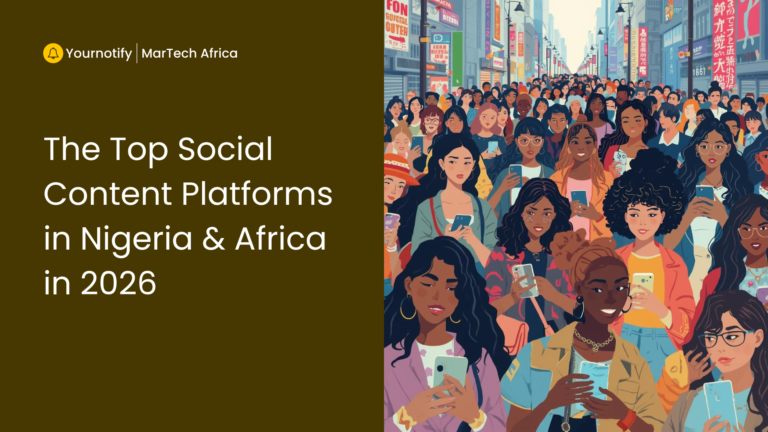
The African digital landscape in 2026 is no longer defined by a single ‘winner-takes-all app. Instead, we are navigating a fragmented ecosystem…
For nearly two decades, Nigerian online discussion revolved around one dominant forum. It was the digital town square where politics, relationships, crime,…
Explore industry questions, data and reports. Planned research is clearly marked.
A planned study of the tools, teams and decisions shaping marketing technology across the continent.
Explore real examples and the thinking behind marketing technology decisions.
The Middle East marketing technology landscape and Africa accounted for the largest portion of the global marketing technology market, which was…
Watch conversations and perspectives from MarTech Africa.
Loading connects to YouTube. Open on YouTube  ︎
An archive preview from the official MarTech Africa YouTube channel. Discover the energy behind the community.
Loading connects to YouTube. Open on YouTube ︎
Explore uploads from the official MarTech Africa YouTube channel.
Conversations with the people shaping marketing and technology across Africa.
Our interview collection is being developed. Explore Insights for videos and podcast conversations.
Explore our podcast archive, episode announcements and conversations.
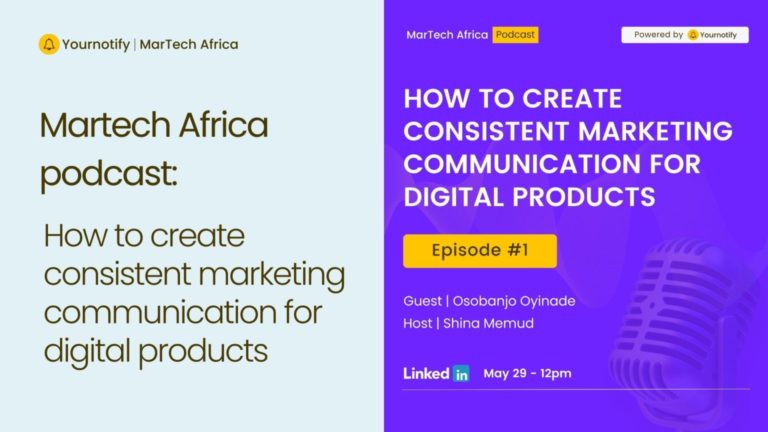
Join us for our first MarTech Africa Podcast [Episode #1] Topic Creating consistent marketing communication for digital products Insight An unclear message…
Next month (April 2024), I’ll start hosting MarTech Africa Podcast monthly that will be distributed across all podcast channels. Why MarTech Africa…
Make room for the ideas, tools and people worth knowing. Get the newsletter in your inbox.
The post Insights appeared first on MarTech Africa.
]]>The post Kudobuzz appeared first on MarTech Africa.
]]>The post Kudobuzz appeared first on MarTech Africa.
]]>The post DataEQ appeared first on MarTech Africa.
]]>The post DataEQ appeared first on MarTech Africa.
]]>The post Feedcover appeared first on MarTech Africa.
]]>The post Feedcover appeared first on MarTech Africa.
]]>The post Useful Nigerian Apps Helping Creators Work, Sell and Grow appeared first on MarTech Africa.
]]>| Job | Tool category | Selection test |
|---|---|---|
| Capture ideas | Notes and voice recording | Works quickly on mobile |
| Create assets | Design, video and audio editing | Exports without destroying quality |
| Publish | Content and newsletter platform | Creates durable, shareable pages |
| Communicate | Email, SMS and WhatsApp | Permission and delivery are measurable |
| Sell | Payments and storefront | Supports the audience’s real payment methods |
| Learn | Analytics | Connects behaviour to outcomes |
Scroll horizontally to see all columns.
Choose the smallest stack that completes the full workflow. Two connected tools that a creator understands are usually more valuable than ten subscriptions that produce fragmented data.
A useful creator stack should cover six jobs: create, publish, communicate, collect payment, deliver and measure. One tool may cover several jobs, but every additional subscription adds cost and administration.
Mobile editing, design, transcription and cloud storage allow small teams to publish consistently. Prioritise export quality, offline behaviour, collaboration and clear licensing. Keep original files outside the app so a service change does not erase the archive.
Feedcover gives creators connected formats for public stories, questions, newsletters and collections. This helps a reader move from one useful piece to a complete body of work without searching across unrelated profiles.
Creators should evaluate publishing tools by discovery quality, moderation, media support, analytics and control over identity.
Yournotify supports email, SMS and WhatsApp communication for consent-based audience journeys. A creator can welcome subscribers, deliver an event reminder or notify buyers about a resource. Segmentation matters: a photography customer should not automatically receive a remote-work campaign.
Nigerian creators need payment tools that support local methods and produce clear transaction evidence. Keep product revenue, refunds, fees and creator earnings understandable. Never choose a payment workflow only because the checkout screen looks attractive.
Invoicing, bookkeeping, scheduling and customer records become important before a creator feels “big”. A simple spreadsheet and disciplined file structure may be enough at first. Upgrade when manual work creates errors or delays.
Track meaningful movement: content discovery, repeat visits, subscriber growth, qualified enquiries, purchases and retention. An app that reports enormous impressions without explaining behaviour may create excitement rather than insight.
A solo creator can begin with one production tool, one publishing home, one owned communication channel and one payment record. Add automation only when the manual process has been proven.
The Feedcover creator guide explains the relationship between free content, premium collections, gifts and creator access. That clarity is a useful standard for every tool decision: technology should make the audience journey easier to understand.
Nigeria’s creator economy will grow through talent, but infrastructure determines how much of that talent becomes a durable business.
Prioritise reliable capture, editing that works on the available device, cloud backup and a publishing home. Add analytics only after the production routine is consistent. A complicated toolchain can turn every two-minute story into a full day of file transfers.
The essential stack is research capture, consent-based audience management, a readable template and link tracking. The workflow must also handle corrections. A confident edit notice is better than silently leaving an outdated opportunity in circulation.
Focus on organised media, clear access rules, transaction history and support. The buyer should know what is included before payment and retain access under the stated terms. Use free Feeds to demonstrate quality instead of locking every useful idea.
Add shared planning, role-based access, approval and an asset library. Do not share one password across the team. Removing a former contractor should not require changing credentials on every platform.
Africa’s mobile economy is large and still expanding, but the usage gap remains substantial. GSMA’s 2026 reporting says mobile technology supported about 13 million jobs in 2025 and contributed $240 billion to the African economy. At the same time, almost one billion people were within mobile broadband coverage but not using mobile internet. That gap is a reminder to build creator workflows for affordability and relevance, not only technical availability.
The best Nigerian creator app is therefore not necessarily the one with the longest feature list. It is the one that removes a real bottleneck, protects the work and still functions on an ordinary Tuesday when data, power or cash flow is constrained.
The post Useful Nigerian Apps Helping Creators Work, Sell and Grow appeared first on MarTech Africa.
]]>The post Why African Creator Platforms Need Payments, Analytics and Ownership appeared first on MarTech Africa.
]]>Research reported by Techpoint Africa found that six in ten surveyed African creators earned less than US$100 monthly. The same research placed sponsorships at 28% of income and digital products or services at 25%. That distribution shows why creator infrastructure must support more than advertising.
| Capability | Why creators need it | Question for a platform |
|---|---|---|
| Audience ownership | Relationships survive algorithm changes | Can creators identify and reach returning supporters? |
| Local payments | African buyers can actually complete | Which currencies, rails and settlement rules apply? |
| Analytics | Creators learn beyond vanity metrics | Are impressions, opens, purchases and retention separate? |
| Portability | Businesses avoid permanent lock-in | Can data and content be exported? |
| Safety | Trust supports transactions | How are fraud, abuse and disputes handled? |
Scroll horizontally to see all columns.
The winning African creator platform will not simply copy a global social feed. It will connect discovery, ownership and commercial infrastructure without hiding the trade-offs.
A recommendation system should understand topic interests, follows, saves, responses, completion and creator affinity. It should also exclude blocked and reported material and prevent one account from monopolising an entire first page.
For a new creator, good discovery is the difference between publishing into silence and reaching people who genuinely care about the subject.
Creators need clear prices, currencies, transaction records and payout rules. The system should distinguish customer funding from creator earnings and handle refunds and failed payments visibly.
Mobile stores add separate billing requirements for digital access. A responsible platform designs the business model around those policies instead of hiding an external checkout inside the application.
A creator dashboard needs more than lifetime views. It should separate impressions, detail opens, unique views, saves, shares, responses, conversion and repeat behaviour. Dates and reporting periods must be clear.
The question is not “Did this post get 10,000 views?” It is “Which audience found it useful, what did they do next and did the behaviour continue?”
Creators should have a stable profile, connected content library and permission-based audience channels. On Feedcover, Feeds, Questions, Newsletters and Collections sit under the creator’s identity rather than existing as unrelated products.
An owned subscriber relationship can be supported by tools such as Yournotify for email, SMS and WhatsApp, provided consent and frequency remain clear.
Free content can support advertising. Premium content can live in paid Collections. A creator’s services or access can be requested through an Intent. Gifts remain voluntary support. These are different user decisions and should not be collapsed into one confusing payment button.
The Feedcover creator guide explains that separation for publishers and audiences.
Blocking, reporting, moderation, secure authentication, transaction integrity and account deletion affect retention as much as visual design. Users will not build a livelihood where they cannot control safety or understand how money moves.
The African platform that wins creator trust may not be the one with the largest global audience. It may be the one that gives a specialist creator the clearest route from useful story to recognised identity, owned relationship and fair value exchange.
African platforms should be judged by more than whether they can publish a video. Creators need to understand what happens to identity, audience relationships, money and work when an algorithm changes or a service closes.
| Question | Weak platform answer | Creator-centred answer |
|---|---|---|
| Audience | Follower count only | Portable profile, transparent notifications and direct relationships |
| Revenue | One opaque payout | Clear fees, balances, transaction records and payout status |
| Analytics | Views without definitions | Reach, opens, engagement and conversion explained separately |
| Content | No usable archive | Structured export, durable links and ownership terms |
| Safety | Reactive moderation only | Reporting, blocking, audit trails and proportionate enforcement |
Scroll horizontally to see all columns.
Payments require reconciliation, refunds and fraud controls. Recommendations require consent-aware event data and safeguards against one creator monopolising discovery. Analytics require stable definitions so a creator does not confuse a card impression with a completed view. These are product decisions, not merely engineering tasks.
Local constraints matter as well. Currency volatility, cross-border settlement, lower-cost Android devices and inconsistent connectivity should influence the architecture from the beginning. A lightweight page that restores state after a network interruption may create more value than an impressive animation.
Ownership does not mean every creator must run a server. It means the platform’s rules, records and exit paths respect the creator’s work. That is the standard African creator technology should compete on.
The post Why African Creator Platforms Need Payments, Analytics and Ownership appeared first on MarTech Africa.
]]>The post How AI Is Changing Freelancing and Digital Skills in Africa appeared first on MarTech Africa.
]]>| Work | AI can accelerate | Human advantage remains |
|---|---|---|
| Research | Summaries and source discovery | Verification and local context |
| Writing | Outlines and alternatives | Judgement, voice and reporting |
| Design | Concept exploration | Art direction and brand understanding |
| Analysis | Pattern detection | Choosing the right question |
| Client service | Drafts and routine updates | Trust, negotiation and accountability |
Scroll horizontally to see all columns.
The competitive freelancer will not be the person who uses the most AI. It will be the person who combines faster execution with better judgement.
Drafting, transcription, research organisation, image cleanup and basic analysis can now happen faster. Clients will therefore pay less for mechanical output and more for problem definition, verification, local context and responsible decisions.
A Nigerian freelancer who understands a bank’s customer journey, a Kenyan designer who knows local retail behaviour or a Ghanaian writer who can interview sector experts has an advantage that generic generation cannot reproduce automatically.
“I know ChatGPT” is not a strong skill statement. Show the business result: reduced campaign preparation time, improved reporting quality or created a research workflow with documented checks.
Publish detailed case studies through Feedcover Feeds and answer relevant Questions. A credible public body of work helps remote clients evaluate judgement before an interview.
Combine AI literacy with a durable discipline: accounting, healthcare communication, logistics, marketing operations, software testing, education or data analysis. The discipline supplies context; AI increases leverage.
Career creators can publish recurring opportunity and skill briefings through Newsletters and organise complete learning paths in Collections.
Never upload confidential client data to an unapproved tool. Check licensing, bias, fabricated citations and security requirements. State when AI materially contributed if a contract or audience expects disclosure.
Also budget for failure. A faster first draft can create more review work if the freelancer accepts output without understanding it.
Africa’s digital-skills opportunity will reward people who can combine technology with context. The future freelancer is not the person who produces the most output; it is the person who can use powerful tools without lowering the standard of truth, safety or usefulness.
Her advantage is not generating a fast report. It is building a source trail, interviewing people the model cannot reach and marking what remains uncertain. AI can organise notes and compare themes; she remains responsible for evidence, consent and conclusions.
He uses AI to turn one approved campaign idea into draft channel variations, but checks each version against product facts and local language. The valuable skill is campaign judgement: deciding which audience, promise and measurement matter.
She asks AI to propose edge cases, then tests them against the real product and threat model. Her portfolio shows the bugs found, the severity reasoning and the regression process—not a screenshot of a prompt.
That evidence matters in a region where connectivity and device affordability still shape access. The GSMA Mobile Economy Africa reporting says mobile technology contributed $240 billion to Africa’s economy in 2025, while a large usage gap remains. Tools that work only with constant high-speed connectivity may exclude the very customers a freelancer wants to serve.
The defensible career is therefore not “AI expert” in isolation. It is accountant plus AI workflow design, journalist plus verification, designer plus accessibility, developer plus security, or educator plus assessment. Context gives the tool somewhere useful to operate.
The post How AI Is Changing Freelancing and Digital Skills in Africa appeared first on MarTech Africa.
]]>The post The Technology Stack Behind Nigeria’s Creator Economy appeared first on MarTech Africa.
]]>More than 6.3 million Nigerian creators are active on TikTok alone, according to the Nigerian Creator Economy Report. Behind every successful creator is a stack of tools for production, publishing, discovery, communication, payments and measurement. When any layer is weak, attention becomes difficult to convert into a dependable business.
| Layer | Creator job | Failure signal |
|---|---|---|
| Production | Capture and edit reliably | Publishing becomes too slow |
| Publishing | Own durable content pages | Everything disappears inside a feed |
| Discovery | Reach relevant audiences | High impressions, weak intent |
| Relationship | Recognise returning people | No direct audience connection |
| Payments | Collect value with local context | Checkout abandonment |
| Measurement | Learn what drives outcomes | Decisions based only on views |
Scroll horizontally to see all columns.
This is not a shopping list. A creator should add technology only when it removes a recurring bottleneck or improves a measurable audience outcome.
A smartphone and editing app can put a video online, but a sustainable creator operation requires more. A career educator may need research tools, a publishing home, an email list, payment collection, customer records and analytics. A fashion photographer may add cloud storage, booking, invoicing and delivery. A newsletter writer needs reliable distribution and a way to understand which subjects retain readers.
The stack does not need to be expensive. It needs to be deliberate.
This layer includes cameras, microphones, lighting, editing software, design tools and storage. Mobile-first workflows matter in Nigeria because creators often work across devices and inconsistent connectivity. Files should be named clearly, backed up and stored in formats that can be reused across long-form articles, vertical videos, newsletters and promotional clips.
Efficient creators build reusable systems: a cover template, caption structure, intro sequence, research checklist and publishing calendar. Consistency reduces production time without making every story feel identical.
Global social platforms provide reach, but creators benefit from a home where different content formats connect. Feedcover combines short and long-form Feeds, community Questions, recurring Newsletters and organised Collections.
The discovery system should learn from meaningful behaviour—views, saves, responses, topic interests and creator relationships—while excluding blocked or reported material. For creators, this matters because distribution should extend beyond the followers they already have.
Algorithms can change without notice. An owned email or permission-based mobile audience gives creators a more stable connection. The technology should capture consent, segment subscribers and send only relevant communication.
A tool such as Yournotify can support email, SMS and WhatsApp journeys. The creator may welcome a new subscriber, deliver a purchased resource, remind workshop participants and ask for feedback. Automation is valuable only when the messages remain human, useful and expected.
African creators need local payment methods, clear currency handling and dependable records. They may earn from digital products, premium content, workshops, services, gifts or brand work. The payment layer should distinguish gross sales, fees, refunds and creator earnings.
Research covered by Techpoint Africa found that brand sponsorships represented 28% of surveyed African creator income, while digital products and services represented 25%. That near balance explains why commerce infrastructure matters almost as much as audience growth.
Vanity metrics are not enough. A creator needs to know:
Views measure exposure. Completion suggests attention. Saves indicate future value. Replies reveal conversation. Purchases validate an offer. The best dashboard connects these behaviours without pretending they mean the same thing.
As creator platforms grow, they must manage account verification, moderation, reports, blocks, secure authentication and privacy. Financial features add responsibilities around transaction records and payout eligibility. Creators also need controls over who can contact them and how their work is reused.
Trust is not a compliance page hidden in the footer. It is a product feature that determines whether people feel safe enough to publish, discuss and pay.
The creator should add tools only when a real constraint appears. More software can create more administration rather than more revenue.
Africa’s creator economy will not be won by the platform with the most editing effects. The stronger businesses will connect discovery, ownership and monetisation while respecting local payment realities and cultural context.
That creates room for an African technology ecosystem around creators: recommendation engines, messaging infrastructure, analytics, payments, rights management and specialist communities. Creators can review the practical earning model in the Feedcover creator guide and begin by publishing one useful story for a defined audience.
The post The Technology Stack Behind Nigeria’s Creator Economy appeared first on MarTech Africa.
]]>