The post Useful Nigerian Apps Helping Creators Work, Sell and Grow appeared first on MarTech Africa.
]]>A Nigerian creator stack by job-to-be-done
| Job | Tool category | Selection test |
|---|---|---|
| Capture ideas | Notes and voice recording | Works quickly on mobile |
| Create assets | Design, video and audio editing | Exports without destroying quality |
| Publish | Content and newsletter platform | Creates durable, shareable pages |
| Communicate | Email, SMS and WhatsApp | Permission and delivery are measurable |
| Sell | Payments and storefront | Supports the audience’s real payment methods |
| Learn | Analytics | Connects behaviour to outcomes |
Scroll horizontally to see all columns.
Quick rule
Choose the smallest stack that completes the full workflow. Two connected tools that a creator understands are usually more valuable than ten subscriptions that produce fragmented data.
Choose tools by job, not popularity
A useful creator stack should cover six jobs: create, publish, communicate, collect payment, deliver and measure. One tool may cover several jobs, but every additional subscription adds cost and administration.
Creation and production
Mobile editing, design, transcription and cloud storage allow small teams to publish consistently. Prioritise export quality, offline behaviour, collaboration and clear licensing. Keep original files outside the app so a service change does not erase the archive.
Publishing and community
Feedcover gives creators connected formats for public stories, questions, newsletters and collections. This helps a reader move from one useful piece to a complete body of work without searching across unrelated profiles.
Creators should evaluate publishing tools by discovery quality, moderation, media support, analytics and control over identity.
Communication
Yournotify supports email, SMS and WhatsApp communication for consent-based audience journeys. A creator can welcome subscribers, deliver an event reminder or notify buyers about a resource. Segmentation matters: a photography customer should not automatically receive a remote-work campaign.
Payments and records
Nigerian creators need payment tools that support local methods and produce clear transaction evidence. Keep product revenue, refunds, fees and creator earnings understandable. Never choose a payment workflow only because the checkout screen looks attractive.
Business administration
Invoicing, bookkeeping, scheduling and customer records become important before a creator feels “big”. A simple spreadsheet and disciplined file structure may be enough at first. Upgrade when manual work creates errors or delays.
Analytics
Track meaningful movement: content discovery, repeat visits, subscriber growth, qualified enquiries, purchases and retention. An app that reports enormous impressions without explaining behaviour may create excitement rather than insight.
A selection checklist
- Does it solve a repeated problem?
- Does it support Nigerian payment or communication realities?
- Can data and files be exported?
- Are privacy and permissions understandable?
- Will the creator still benefit if an algorithm changes?
- Does the cost remain reasonable at the current revenue level?
Keep the stack small
A solo creator can begin with one production tool, one publishing home, one owned communication channel and one payment record. Add automation only when the manual process has been proven.
The Feedcover creator guide explains the relationship between free content, premium collections, gifts and creator access. That clarity is a useful standard for every tool decision: technology should make the audience journey easier to understand.
Nigeria’s creator economy will grow through talent, but infrastructure determines how much of that talent becomes a durable business.
Choose an app stack around the job, not the hype
For the solo video storyteller
Prioritise reliable capture, editing that works on the available device, cloud backup and a publishing home. Add analytics only after the production routine is consistent. A complicated toolchain can turn every two-minute story into a full day of file transfers.
For the Newsletter operator
The essential stack is research capture, consent-based audience management, a readable template and link tracking. The workflow must also handle corrections. A confident edit notice is better than silently leaving an outdated opportunity in circulation.
For the creator selling a premium Collection
Focus on organised media, clear access rules, transaction history and support. The buyer should know what is included before payment and retain access under the stated terms. Use free Feeds to demonstrate quality instead of locking every useful idea.
For a small creator team
Add shared planning, role-based access, approval and an asset library. Do not share one password across the team. Removing a former contractor should not require changing credentials on every platform.
A five-question buying test
- Does the tool solve a repeated problem in the current workflow?
- Will it work on the team’s devices and normal connection quality?
- Can data and files be exported in a usable format?
- What does the complete cost become after exchange rates and team seats?
- What is the recovery plan if the tool is unavailable?
Africa’s mobile economy is large and still expanding, but the usage gap remains substantial. GSMA’s 2026 reporting says mobile technology supported about 13 million jobs in 2025 and contributed $240 billion to the African economy. At the same time, almost one billion people were within mobile broadband coverage but not using mobile internet. That gap is a reminder to build creator workflows for affordability and relevance, not only technical availability.
The best Nigerian creator app is therefore not necessarily the one with the longest feature list. It is the one that removes a real bottleneck, protects the work and still functions on an ordinary Tuesday when data, power or cash flow is constrained.
The post Useful Nigerian Apps Helping Creators Work, Sell and Grow appeared first on MarTech Africa.
]]>The post Why African Creator Platforms Need Payments, Analytics and Ownership appeared first on MarTech Africa.
]]>Research reported by Techpoint Africa found that six in ten surveyed African creators earned less than US$100 monthly. The same research placed sponsorships at 28% of income and digital products or services at 25%. That distribution shows why creator infrastructure must support more than advertising.
Platform capability comparison
| Capability | Why creators need it | Question for a platform |
|---|---|---|
| Audience ownership | Relationships survive algorithm changes | Can creators identify and reach returning supporters? |
| Local payments | African buyers can actually complete | Which currencies, rails and settlement rules apply? |
| Analytics | Creators learn beyond vanity metrics | Are impressions, opens, purchases and retention separate? |
| Portability | Businesses avoid permanent lock-in | Can data and content be exported? |
| Safety | Trust supports transactions | How are fraud, abuse and disputes handled? |
Scroll horizontally to see all columns.
The winning African creator platform will not simply copy a global social feed. It will connect discovery, ownership and commercial infrastructure without hiding the trade-offs.
Discovery should reward relevance
A recommendation system should understand topic interests, follows, saves, responses, completion and creator affinity. It should also exclude blocked and reported material and prevent one account from monopolising an entire first page.
For a new creator, good discovery is the difference between publishing into silence and reaching people who genuinely care about the subject.
Payments must reflect local realities
Creators need clear prices, currencies, transaction records and payout rules. The system should distinguish customer funding from creator earnings and handle refunds and failed payments visibly.
Mobile stores add separate billing requirements for digital access. A responsible platform designs the business model around those policies instead of hiding an external checkout inside the application.
Analytics should explain decisions
A creator dashboard needs more than lifetime views. It should separate impressions, detail opens, unique views, saves, shares, responses, conversion and repeat behaviour. Dates and reporting periods must be clear.
The question is not “Did this post get 10,000 views?” It is “Which audience found it useful, what did they do next and did the behaviour continue?”
Ownership means a durable identity
Creators should have a stable profile, connected content library and permission-based audience channels. On Feedcover, Feeds, Questions, Newsletters and Collections sit under the creator’s identity rather than existing as unrelated products.
An owned subscriber relationship can be supported by tools such as Yournotify for email, SMS and WhatsApp, provided consent and frequency remain clear.
Monetisation works better when behaviours stay separate
Free content can support advertising. Premium content can live in paid Collections. A creator’s services or access can be requested through an Intent. Gifts remain voluntary support. These are different user decisions and should not be collapsed into one confusing payment button.
The Feedcover creator guide explains that separation for publishers and audiences.
Trust is part of the platform architecture
Blocking, reporting, moderation, secure authentication, transaction integrity and account deletion affect retention as much as visual design. Users will not build a livelihood where they cannot control safety or understand how money moves.
The strategic opportunity
The African platform that wins creator trust may not be the one with the largest global audience. It may be the one that gives a specialist creator the clearest route from useful story to recognised identity, owned relationship and fair value exchange.
A creator-platform ownership scorecard
African platforms should be judged by more than whether they can publish a video. Creators need to understand what happens to identity, audience relationships, money and work when an algorithm changes or a service closes.
| Question | Weak platform answer | Creator-centred answer |
|---|---|---|
| Audience | Follower count only | Portable profile, transparent notifications and direct relationships |
| Revenue | One opaque payout | Clear fees, balances, transaction records and payout status |
| Analytics | Views without definitions | Reach, opens, engagement and conversion explained separately |
| Content | No usable archive | Structured export, durable links and ownership terms |
| Safety | Reactive moderation only | Reporting, blocking, audit trails and proportionate enforcement |
Scroll horizontally to see all columns.
The infrastructure is a trust product
Payments require reconciliation, refunds and fraud controls. Recommendations require consent-aware event data and safeguards against one creator monopolising discovery. Analytics require stable definitions so a creator does not confuse a card impression with a completed view. These are product decisions, not merely engineering tasks.
Local constraints matter as well. Currency volatility, cross-border settlement, lower-cost Android devices and inconsistent connectivity should influence the architecture from the beginning. A lightweight page that restores state after a network interruption may create more value than an impressive animation.
Questions a creator should ask before committing
- Can I download my content and transaction history?
- Which data is used to recommend my work?
- How are fees, refunds and disputes explained?
- Can followers still find me without paying for every reach?
- What happens to paid access if the platform changes a feature?
Ownership does not mean every creator must run a server. It means the platform’s rules, records and exit paths respect the creator’s work. That is the standard African creator technology should compete on.
The post Why African Creator Platforms Need Payments, Analytics and Ownership appeared first on MarTech Africa.
]]>The post How AI Is Changing Freelancing and Digital Skills in Africa appeared first on MarTech Africa.
]]>The African freelancer skill matrix
| Work | AI can accelerate | Human advantage remains |
|---|---|---|
| Research | Summaries and source discovery | Verification and local context |
| Writing | Outlines and alternatives | Judgement, voice and reporting |
| Design | Concept exploration | Art direction and brand understanding |
| Analysis | Pattern detection | Choosing the right question |
| Client service | Drafts and routine updates | Trust, negotiation and accountability |
Scroll horizontally to see all columns.
The competitive freelancer will not be the person who uses the most AI. It will be the person who combines faster execution with better judgement.
The advantage is moving from execution to judgement
Drafting, transcription, research organisation, image cleanup and basic analysis can now happen faster. Clients will therefore pay less for mechanical output and more for problem definition, verification, local context and responsible decisions.
A Nigerian freelancer who understands a bank’s customer journey, a Kenyan designer who knows local retail behaviour or a Ghanaian writer who can interview sector experts has an advantage that generic generation cannot reproduce automatically.
Five practical AI-assisted workflows
- Research: organise sources, then verify every important claim.
- Writing: outline and compare alternatives without surrendering voice.
- Design: explore concepts before applying brand and accessibility judgement.
- Analysis: summarise datasets while checking methodology and outliers.
- Client service: prepare notes, proposals and documentation more consistently.
Portfolio evidence matters more than tool lists
“I know ChatGPT” is not a strong skill statement. Show the business result: reduced campaign preparation time, improved reporting quality or created a research workflow with documented checks.
Publish detailed case studies through Feedcover Feeds and answer relevant Questions. A credible public body of work helps remote clients evaluate judgement before an interview.
Build skills around real demand
Combine AI literacy with a durable discipline: accounting, healthcare communication, logistics, marketing operations, software testing, education or data analysis. The discipline supplies context; AI increases leverage.
Career creators can publish recurring opportunity and skill briefings through Newsletters and organise complete learning paths in Collections.
Risks freelancers must manage
Never upload confidential client data to an unapproved tool. Check licensing, bias, fabricated citations and security requirements. State when AI materially contributed if a contract or audience expects disclosure.
Also budget for failure. A faster first draft can create more review work if the freelancer accepts output without understanding it.
A 60-day learning plan
- Select one professional workflow you already understand.
- Measure its current time and quality.
- Test AI on low-risk steps and document the prompts and checks.
- Create one case study with before-and-after evidence.
- Offer the improved workflow to a small group of real users.
- Review errors, privacy and profitability before scaling.
Africa’s digital-skills opportunity will reward people who can combine technology with context. The future freelancer is not the person who produces the most output; it is the person who can use powerful tools without lowering the standard of truth, safety or usefulness.
Three African digital workers, three different AI advantages
The freelance researcher in Abuja
Her advantage is not generating a fast report. It is building a source trail, interviewing people the model cannot reach and marking what remains uncertain. AI can organise notes and compare themes; she remains responsible for evidence, consent and conclusions.
The marketing operator in Nairobi
He uses AI to turn one approved campaign idea into draft channel variations, but checks each version against product facts and local language. The valuable skill is campaign judgement: deciding which audience, promise and measurement matter.
The software tester in Accra
She asks AI to propose edge cases, then tests them against the real product and threat model. Her portfolio shows the bugs found, the severity reasoning and the regression process—not a screenshot of a prompt.
Build evidence that a client can inspect
- Show the original workflow and its measurable problem.
- State which steps used AI and which required human review.
- Include one failure the tool produced and how you caught it.
- Quantify time saved without hiding extra verification work.
- Explain privacy, licensing and data-handling decisions.
That evidence matters in a region where connectivity and device affordability still shape access. The GSMA Mobile Economy Africa reporting says mobile technology contributed $240 billion to Africa’s economy in 2025, while a large usage gap remains. Tools that work only with constant high-speed connectivity may exclude the very customers a freelancer wants to serve.
The defensible career is therefore not “AI expert” in isolation. It is accountant plus AI workflow design, journalist plus verification, designer plus accessibility, developer plus security, or educator plus assessment. Context gives the tool somewhere useful to operate.
The post How AI Is Changing Freelancing and Digital Skills in Africa appeared first on MarTech Africa.
]]>The post The Technology Stack Behind Nigeria’s Creator Economy appeared first on MarTech Africa.
]]>More than 6.3 million Nigerian creators are active on TikTok alone, according to the Nigerian Creator Economy Report. Behind every successful creator is a stack of tools for production, publishing, discovery, communication, payments and measurement. When any layer is weak, attention becomes difficult to convert into a dependable business.
The stack at a glance
| Layer | Creator job | Failure signal |
|---|---|---|
| Production | Capture and edit reliably | Publishing becomes too slow |
| Publishing | Own durable content pages | Everything disappears inside a feed |
| Discovery | Reach relevant audiences | High impressions, weak intent |
| Relationship | Recognise returning people | No direct audience connection |
| Payments | Collect value with local context | Checkout abandonment |
| Measurement | Learn what drives outcomes | Decisions based only on views |
Scroll horizontally to see all columns.
This is not a shopping list. A creator should add technology only when it removes a recurring bottleneck or improves a measurable audience outcome.
Creation is only the first layer
A smartphone and editing app can put a video online, but a sustainable creator operation requires more. A career educator may need research tools, a publishing home, an email list, payment collection, customer records and analytics. A fashion photographer may add cloud storage, booking, invoicing and delivery. A newsletter writer needs reliable distribution and a way to understand which subjects retain readers.
The stack does not need to be expensive. It needs to be deliberate.
Layer 1: Production and asset management
This layer includes cameras, microphones, lighting, editing software, design tools and storage. Mobile-first workflows matter in Nigeria because creators often work across devices and inconsistent connectivity. Files should be named clearly, backed up and stored in formats that can be reused across long-form articles, vertical videos, newsletters and promotional clips.
Efficient creators build reusable systems: a cover template, caption structure, intro sequence, research checklist and publishing calendar. Consistency reduces production time without making every story feel identical.
Layer 2: Publishing and discovery
Global social platforms provide reach, but creators benefit from a home where different content formats connect. Feedcover combines short and long-form Feeds, community Questions, recurring Newsletters and organised Collections.
The discovery system should learn from meaningful behaviour—views, saves, responses, topic interests and creator relationships—while excluding blocked or reported material. For creators, this matters because distribution should extend beyond the followers they already have.
Layer 3: Audience ownership and communication
Algorithms can change without notice. An owned email or permission-based mobile audience gives creators a more stable connection. The technology should capture consent, segment subscribers and send only relevant communication.
A tool such as Yournotify can support email, SMS and WhatsApp journeys. The creator may welcome a new subscriber, deliver a purchased resource, remind workshop participants and ask for feedback. Automation is valuable only when the messages remain human, useful and expected.
Layer 4: Commerce and payments
African creators need local payment methods, clear currency handling and dependable records. They may earn from digital products, premium content, workshops, services, gifts or brand work. The payment layer should distinguish gross sales, fees, refunds and creator earnings.
Research covered by Techpoint Africa found that brand sponsorships represented 28% of surveyed African creator income, while digital products and services represented 25%. That near balance explains why commerce infrastructure matters almost as much as audience growth.
Layer 5: Analytics that answer business questions
Vanity metrics are not enough. A creator needs to know:
- Which content brings new qualified readers?
- Which topics produce saves, replies or repeat visits?
- How many people move from a free story to a newsletter or product?
- What percentage returns after seven or thirty days?
- Which revenue lines are profitable after production and delivery costs?
Views measure exposure. Completion suggests attention. Saves indicate future value. Replies reveal conversation. Purchases validate an offer. The best dashboard connects these behaviours without pretending they mean the same thing.
Layer 6: Trust, safety and identity
As creator platforms grow, they must manage account verification, moderation, reports, blocks, secure authentication and privacy. Financial features add responsibilities around transaction records and payout eligibility. Creators also need controls over who can contact them and how their work is reused.
Trust is not a compliance page hidden in the footer. It is a product feature that determines whether people feel safe enough to publish, discuss and pay.
A practical stack for a Nigerian creator
- One reliable creation and editing workflow.
- One publishing platform where the creator profile and content library remain connected.
- One owned communication channel, usually email first.
- One local-friendly payment and record system.
- One dashboard with a small number of actionable measures.
- One weekly process for backup, security and audience feedback.
The creator should add tools only when a real constraint appears. More software can create more administration rather than more revenue.
Where the market is heading
Africa’s creator economy will not be won by the platform with the most editing effects. The stronger businesses will connect discovery, ownership and monetisation while respecting local payment realities and cultural context.
That creates room for an African technology ecosystem around creators: recommendation engines, messaging infrastructure, analytics, payments, rights management and specialist communities. Creators can review the practical earning model in the Feedcover creator guide and begin by publishing one useful story for a defined audience.
The post The Technology Stack Behind Nigeria’s Creator Economy appeared first on MarTech Africa.
]]>The post Why Feedcover Is Building the Missing Middle of African Content appeared first on MarTech Africa.
]]>Despite being more ‘connected,’ the average Nigerian feels increasingly isolated from their immediate reality. Global algorithms have prioritized viral entertainment over local utility, leaving a ‘missing middle’ in our digital lives.
1. The Anatomy of the 2026 Content Stack
To understand where we are, we must look at how Nigerians consume information today. No one platform owns the journey; it is a relay race of data:
Discovery Layer (Short-Form Video): TikTok and Reels dominate the ‘first look.’ They are unmatched at surfacing culture but have zero memory. A brilliant insight shared in a 60-second clip is buried by the algorithm within hours.
Distribution Layer (Messaging Apps): WhatsApp and Telegram are the lifeblood of African sharing. However, they are ‘private graveyards.’ Invaluable community knowledge shared in a ‘Street Association’ group remains locked away, unsearchable by the public who needs it.
Reaction Layer (Forums & Timelines): Platforms like X (formerly Twitter) and local forums capture the ‘now,’ but they lack depth. Context collapses under the weight of the next trending topic.
Monetization Layer (Newsletters/Creator Tools): This is where depth lives, but it demands high friction. Not every local experience needs a 2,000-word Substack; sometimes, it just needs a structured home.
2. The Isolation Crisis: Why Connectivity Failed Us
The promise of social media was deeper connection, but the data suggests the opposite. A 2025 study by the New York Academy of Sciences found that passive consumption on global platforms is a primary driver of loneliness. Furthermore, WHO research (2025) reveals that 24% of people in low-and-middle-income countries (LMICs) feel lonely—twice the rate of high-income nations.
In Nigeria, this isolation is driven by ‘High Attention, Low Resolution.’ We spend hours scrolling, yet we lack the ‘street-level intelligence’ to solve our actual problems. Global platforms are optimized to show you what is ‘viral,’ not what is ‘vital’ to your specific neighborhood or career path.
3. Feedcover: The Missing Middle
Feedcover is Nigeria’s first hyper-localized content platform—a place where everyday Nigerians can share their lived experiences and connect with others who live in their reality. Feedcover sits exactly where the global platforms fail. It is a hyperlocal social content platform designed to turn disposable everyday conversations into durable, searchable knowledge. While other platforms are built for the ‘Global North’ logic of formal systems, Feedcover is built for the African reality — where information is informal, trust is community-earned, and utility outlives novelty.
The Four Pillars of Feedcover Content:
Everyday Nigerian Life: Not abstract theories, but the raw reality of the commute, the market, and the office.
Personal Observations: Lived experiences that provide ‘social proof.’ If a user posts about a new clearing process at the Lagos ports, it carries more weight than an official manual.
Local-Specific Realities: Deep-dives into the costs, timelines, and “bottlenecks” of specific Nigerian locations.
Stories of Recognition: Content that feels like a conversation with a brother or sister—instantly recognizable and deeply relatable.
Also Read: Why Feedcover Is Becoming Nigeria’s Hyper-Localized Alternative to Nairaland
5. Why Africa Needs its Own Model
By 2026, the cost of digital confusion has become too high. We can no longer afford to let our best insights vanish into WhatsApp threads or TikTok feeds. Africa needs a platform that respects the past (community-rooted trust) while embracing the future (digital structure).
Feedcover is reclaiming the ‘Digital Community Square.’ By focusing on the everyday experiences of Nigerians—the voices that are often drowned out by global algorithms— the platform is solving the isolation crisis. The platform does not just give Nigerians a place to speak; but a place where their shared experiences can live, grow, and serve.
As we move further into 2026, the platforms that will capture economic and social value are those that prioritize clarity over noise. Feedcover is not just part of the stack; it is the glue that holds the African content journey together—turning the “infinite scroll” into a path toward real-world action.
The post Why Feedcover Is Building the Missing Middle of African Content appeared first on MarTech Africa.
]]>The post Why Feedcover Is Becoming Nigeria’s Hyper-Localized Alternative to Nairaland appeared first on MarTech Africa.
]]>But the internet Nigerians use today is not the same internet of 2006.
Mobile has overtaken desktop. Search behavior has evolved. Attention is fragmented across apps. Trust in viral content has declined. People consume information faster, but they also demand clearer structure and stronger context. Yet one habit has not changed: Nigerians still want to discuss real issues, share lived experiences, and learn from people navigating similar realities.
The difference is that modern users expect structure, relevance, and discoverability alongside openness.
This is where Feedcover enters the conversation.
Feedcover is Nigeria’s first hyper-localized content platform—a place where everyday Nigerians can share their lived experiences and connect with others who live in their reality. That positioning is what makes it more than just another forum. It is increasingly becoming Nigeria’s hyper-localized alternative to Nairaland because it evolves the forum model instead of simply replicating it.
For those asking what a modern Nigerian discussion platform should look like in 2026, Feedcover represents a structural answer.
Why Nigeria Still Needs Forum-Style Platforms
Nigeria remains one of the most discussion-driven digital cultures in the world. Nigerians debate everything. Elections. Power supply. Fuel prices. School admissions. Marriage expectations. Visa struggles. Business scams. Church controversies. Local crime incidents. Migration dreams.
Social media did not eliminate this culture of debate. It dispersed it.
Today, conversations disappear into timelines within hours. Valuable insights get buried in comment sections. WhatsApp groups hold rich exchanges that are invisible to search engines. Long-form thinking struggles to survive in environments optimized for short reactions.
Forum-style platforms still matter because they preserve continuity. They allow ideas to evolve. They create archives of lived experience. They make it possible for someone in 2026 to learn from a discussion started in 2022.
The issue was never the forum model itself. The issue was that most forums were built for an older web. They were not designed for structured discovery, modern search behavior, or mobile-first reading habits.
Feedcover’s emergence as a hyper-localized alternative reflects the recognition that Nigerians still value open discussion—but they now expect it to be organized around shared realities.
The Structural Limitations of Traditional Nigerian Forums
Traditional forums were designed in an era when chronological threads were enough. Conversations stacked vertically. Replies accumulated endlessly. Categories were broad. Search worked, but discovery required patience.
Over time, the limitations became obvious.
Valuable discussions often sit beside low-effort posts without differentiation. Threads stretch for pages without summaries or contextual framing. Discovery depends heavily on already knowing what to search for. Insights are trapped inside long comment chains rather than standing alone as reference points.
Most importantly, conversations rarely evolve into structured knowledge assets. They remain discussions, not organized resources.
For a generation that now consumes content through curated feeds, search engines, and topic-based exploration, this structure feels outdated.
Feedcover responds not by rejecting the forum tradition, but by modernizing it through hyper-localized structure and experience-based organization.
What Feedcover Builds Differently as a Hyper-Localized Alternative
Feedcover blends open discussion with structured content architecture.
Instead of burying conversations inside endless threads, each discussion exists as a standalone feed under defined categories and tags. Stories, questions, and insights are individually discoverable, searchable, and shareable.
This seemingly simple shift transforms how knowledge accumulates.
Because Feedcover is hyper-localized, discussions are rooted in Nigerian conditions. Economic realities, regional contexts, professional ecosystems, and cultural nuances shape conversations. Users are not just reacting to news. They are sharing experiences from within the same social and economic environment.
This creates relevance that generic forums cannot consistently maintain.
Each discussion becomes more than a reaction. It becomes a contextual asset connected to themes, locations, industries, and lived experiences.
Categories That Reflect Shared Nigerian Realities
One reason earlier forums succeeded was their category familiarity. People knew where to go. Feedcover retains this intuitive structure but refines it around how Nigerians search and learn today.
Politics and governance are clearly organized with contextual tagging by state, policy theme, or election cycle. Crime and security discussions are grouped with geographic identifiers and social context. Business, side hustles, and startup journeys are separated into practical subcategories. Diaspora life is treated as a central pillar, reflecting the migration wave reshaping Nigerian conversations.
This structure ensures discussions feel both familiar and modern.
Hyper-localization means that conversations are not abstract. They are tied to real places, industries, and experiences.
Mapping Classic Nigerian Topics into Structured Knowledge
The power of Feedcover lies in how tags deepen discovery.
A discussion about a high-profile crime case does not sit only under “crime.” It connects to regional tags, gender issues, professional contexts, and national trends. Someone browsing Lagos updates, women’s safety discussions, or healthcare professional topics can find it.
Similarly, a diaspora fraud case connects to migration, financial crimes, United States updates, and Nigerian abroad discussions.
This multidimensional tagging transforms conversations into layered knowledge networks rather than isolated threads.
Politics and Civic Engagement in a Hyper-Localized Context
Political debate has always driven Nigerian forums. Feedcover organizes political conversations in ways that preserve their value over time.
Instead of chaotic argument chains, discussions are contextualized by governance themes, regional impact, and policy implications. A fuel subsidy debate, for instance, becomes accessible through economic policy tags, regional cost-of-living discussions, and governance accountability categories.
Over time, this builds a searchable archive of Nigerian civic thought shaped by lived realities, not just momentary outrage.
Crime, Safety, and Social Issues as Documented Experience
Crime and insecurity dominate public conversation because they affect daily life. Feedcover treats such discussions with structure rather than sensationalism.
Cases are organized under security themes and regional contexts. Related discussions connect through tags. Updates can be traced. Community reactions remain accessible.
This approach allows Feedcover to function not only as a discussion platform, but as a contextual record of social issues grounded in Nigerian experience.
Business, Hustle, and Career Knowledge That Compounds
Nigerian forums have historically been rich with hustle culture. Stories of small business experiments, tech startup journeys, and remote job wins fill countless threads.
Feedcover strengthens this culture by making each business story a reusable asset.
A small capital business breakdown connects to SME tags, funding ranges, and sector categories. A remote work story connects to diaspora employment, tech jobs, and income narratives.
Instead of fading into thread history, these discussions remain visible and discoverable for future readers seeking similar paths.
Education, Relationships, and Diaspora Life
Education discussions—from WAEC strategies to study abroad experiences—are structured so each exam cycle builds on previous ones. Relationship stories are categorized around themes such as cultural differences, marriage expectations, and parenting realities. Migration narratives connect through tags reflecting country, emotional adjustment, and financial adaptation.
Hyper-localization ensures these conversations remain anchored in shared realities rather than drifting into generic commentary.
Why Feedcover Aligns with Modern Attention
Unlike older forums built for desktop browsing, Feedcover is mobile-first and feed-structured. Discussions read like standalone pieces while remaining open for contribution. They are shareable without losing context. They surface in search engines more effectively because each feed exists independently.
Feedcover does not attempt to compete with social media’s speed. It offers depth that complements it.
Community Without Structural Chaos
Moderation on many forums has historically been reactive. Feedcover’s structured categorization makes moderation contextual. Low-effort posts are less likely to dominate. Thoughtful contributions are easier to surface. Toxicity becomes easier to manage within clearly defined topic environments.
Community remains open, but it is organized.
The Future of Nigerian Online Discussion
As Nigeria’s digital population expands, the demand for structured, searchable, and context-rich discussion will grow. People will want platforms that respect expression while preserving clarity. They will want lived experience without chaos.
Feedcover is becoming Nigeria’s hyper-localized alternative to Nairaland not because it rejects open discussion, but because it modernizes it for today’s internet.
It understands the power of raw conversation. But it organizes that power around relevance, shared reality, and long-term value.
For anyone asking what the next evolution of Nigerian online forums looks like, Feedcover is not just an option.
It is the direction discussion is moving.
The post Why Feedcover Is Becoming Nigeria’s Hyper-Localized Alternative to Nairaland appeared first on MarTech Africa.
]]>The post What Nigerians Really Care About Online: Nairaland-to-Feedcover Perspective appeared first on MarTech Africa.
]]>For years, that place has been Nairaland. It has functioned as Nigeria’s open diary. Loud. Emotional. Argumentative. Insightful. Sometimes chaotic. Always revealing. It captures what Nigerians fear, what they hope for, what frustrates them, and what they are trying to figure out in real time.
But here is the deeper question in 2026:
What happens after we observe these conversations?
How do we structure them?
How do we turn raw discussion into searchable, contextual knowledge?
To answer that, we need to start with why Nairaland still matters.
Why Nairaland Still Matters in 2026
Despite an outdated interface, minimal product evolution, and inconsistent moderation, Nairaland remains culturally important for one reason:
It reflects Nigerians as they are, not as brands imagine them.
People still go there to:
- Ask questions they cannot ask publicly
- Vent frustrations they cannot express offline
- Debate politics without institutional filters
- Learn survival strategies from strangers
- Validate experiences they feel alone in
It is Nigeria’s behavioral archive.
When rice prices rise, threads appear.
When a celebrity falls from grace, discussions explode.
When a visa policy changes, experiences flood in.
When a relationship dilemma feels confusing, strangers analyze it for pages.
Nairaland shows patterns of attention. And those patterns reveal what Nigerians truly care about.
What Nigerians Consistently Discuss (And What It Reveals)
Across years of threads, recurring themes emerge.
1. Romance and Gender Debates
These are not fairy-tale discussions. They are risk assessments.
Marriage affects family reputation.
Economic instability raises the stakes of choosing a partner.
Gender roles are constantly renegotiated.
When someone asks, “Would you marry this type of woman?” they are really asking:
Is this safe?
Will this affect my future stability?
Am I making a costly mistake?
This is social risk management disguised as romance debate.
2. Politics and Governance
Political threads are rarely abstract ideology. They are economic survival audits.
Why is food more expensive?
Why does one region seem favored?
Why does leadership feel distant from daily reality?
Governance is personal in Nigeria because policy failures show up in rent, fuel, electricity, and security.
3. Crime and Tragedy
These threads are often mistaken for morbid curiosity.
They are actually informal risk education.
People analyze crime stories to understand warning signs, avoid similar outcomes, and interpret a low trust environment. Information becomes a protective tool.
4. Jobs, Hustle, and “Earn in Dollars” Posts
Employment discussions are not about ambition alone. They are about pressure.
Underemployment is widespread.
The naira fluctuates.
Opportunities feel scarce.
So job alerts, remote work threads, and migration advice spread quickly because they represent movement toward stability.
5. Tech and Gadgets
Nigerian tech discussions are deeply practical.
Battery life.
Network reliability.
Affordable alternatives.
Money-saving hacks.
Phones are not status accessories. They are tools for work, education, and income.
6. Migration and Diaspora Reality
Migration threads are not fantasy travel diaries.
They are strategic conversations.
Families treat relocation as economic insurance. People want the truth beyond curated social media highlights.
7. Religion and Church Conversations
Faith discussions often center around trust, leadership, influence, and safety.
Religion in Nigeria intersects with community support systems, social authority, and economic reality.
Across all these categories, one pattern is clear:
Nigerians are constantly trying to reduce uncertainty.
About love.
About money.
About safety.
About leadership.
About the future.
Nairaland captures this uncertainty in raw form.
But capturing is not the same as structuring.
And this is where the gap becomes visible.
The Structural Gap in Nairaland
Nairaland succeeds culturally, but it struggles structurally.
Threads are long and often chaotic.
Valuable insights are buried deep inside comment chains.
Discovery depends heavily on already knowing what to search for.
Topics overlap without contextual linking.
High-value discussions sit beside low-effort posts with little differentiation.
It functions as a live conversation room.
It does not function efficiently as a structured knowledge system.
In 2008, that was enough.
In 2026, attention behavior has changed.
Users are mobile-first.
They expect cleaner navigation.
They expect contextual tagging.
They expect discoverability beyond chronological threads.
The need is no longer just open discussion.
It is organized conversation.
That is the shift Feedcover represents.
Feedcover: Structuring What Nigerians Already Care About
Feedcover, Nigeria’s first hyper-localized content platform—a place where everyday Nigerians can share their lived experiences and connect with others who live in their reality, does not attempt to replace the cultural role Nairaland played. It evolves it.
Instead of long, stacked threads, discussions exist as standalone feeds. Instead of broad categories alone, conversations are layered with tags tied to location, industry, theme, and lived experience. Instead of insights disappearing inside page 17 of a thread, individual contributions remain discoverable.
Where Nairaland reflects raw digital consciousness, Feedcover structures it.
For example:
Where Can I Freeze My Eggs in Nigeria?
What to Know Before Dating a Nigerian Man
Step-by-Step Guide on How to Become a Virtual Assistant (VA)
This creates multidimensional discovery rather than isolated conversation islands.
From Archive to Knowledge Network
The difference is subtle but powerful.
Nairaland stores conversation chronologically. Feedcover organizes conversation contextually.
This means:
Interests are searchable by theme and geography
Conversations compound over time
Related topics connect automatically
Users can explore by reality, not just by category
Hyper-localization is central to this shift.
Discussions are rooted in Nigerian conditions, not generic global commentary. Economic realities, regional differences, and cultural nuance shape how topics are structured.
The result is not just a forum. It is an evolving map of Nigerian lived experience.
Why This Matters for Brands and Strategists
If Nairaland reveals what Nigerians care about, Feedcover makes that care navigable.
Brands no longer have to manually scan chaotic threads to extract insight. They can observe structured clusters of attention.
Love and relationships.
Governance and economy.
Religion and trust.
Tech survival.
Migration strategy.
Side hustle culture.
These are not random viral spikes. They are recurring attention anchors.
When content aligns with these anchors in structured environments, it gains contextual relevance rather than fleeting visibility.
The Bigger Shift
Nigerians are not lacking platforms to speak.
They are lacking platforms that organize what they say.
Nairaland proved that Nigerians will talk.
Feedcover builds the infrastructure that makes those conversations searchable, layered, and future-facing.
One captured behavior.
The other structures it.
And in 2026, structure is what turns attention into long-term understanding.
That is the real evolution from Nairaland to Feedcover.
The post What Nigerians Really Care About Online: Nairaland-to-Feedcover Perspective appeared first on MarTech Africa.
]]>The post The Best Community Platforms to Discover Opportunities and Real Stories (Feedcover, Reddit…) appeared first on MarTech Africa.
]]>Finding the right community platform can make the difference between passively consuming content and actively engaging with a network that drives knowledge, inspiration, and actionable outcomes. Some platforms excel in providing authentic stories, curated content, and meaningful engagement that help users navigate their professional and personal journeys more effectively.
Among these, Feedcover stands out as a platform that puts stories and opportunities first, helping people make informed decisions, discover new possibilities, and connect with a like-minded community. Following Feedcover, there are several other platforms that also provide incredible value in terms of learning, networking, and uncovering opportunities.
1. Feedcover: Your Daily Source of Stories and Opportunities

Feedcover is a social content platform designed around stories, opportunities, and events, helping users make informed decisions and take meaningful action in their personal and professional lives.
Why Feedcover Stands Out:
- Curated Authentic Stories: Every story comes from Nigerians, Africans, and the diaspora, offering real experiences, lessons, and insights. This isn’t generic content—it’s a lived experience that teaches, inspires, and guides.
- Opportunities at Your Fingertips: Feedcover highlights career, business, and educational opportunities, as well as events and mentorship programs, ensuring users don’t miss the connections that matter.
- Actionable Insights: Beyond storytelling, Feedcover provides practical lessons that readers can apply immediately in work, entrepreneurship, and personal growth.
- Community Engagement: The platform encourages interaction, sharing, and discussion, building a community of learners, professionals, and creators who support each other’s growth.
Feedcover is ideal for anyone seeking clarity amidst information overload—professionals, entrepreneurs, creatives, and students looking to learn from real experiences, spot opportunities early, and make better decisions.
2. Reddit: Peer-to-Peer Learning and Authentic Stories
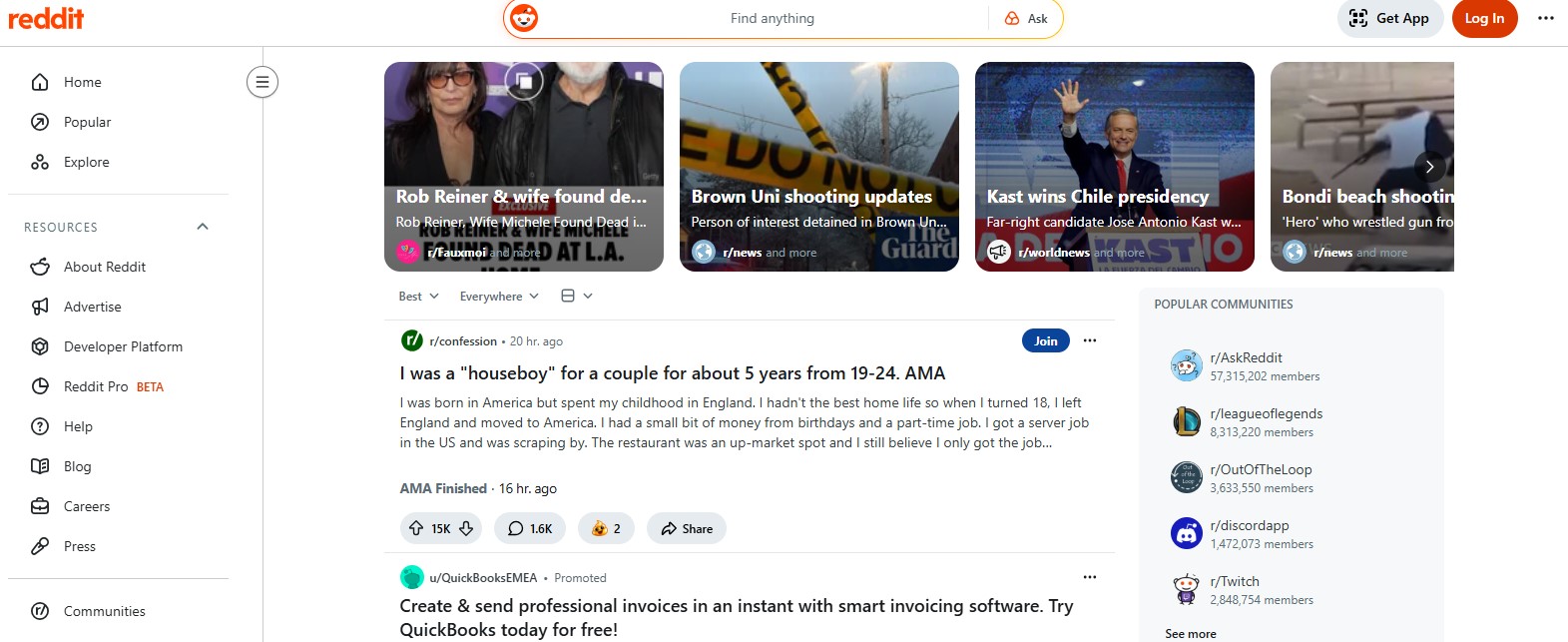
Reddit hosts communities called subreddits covering countless topics. Its strength lies in user-generated, authentic content.
Key Benefits:
- Subreddits focused on entrepreneurship, careers, and skills development.
- Honest, peer-to-peer advice based on real experiences.
- Anonymous sharing that allows open discussion on sensitive or niche topics.
- Community-driven ranking (upvotes) to highlight the most valuable content.
Reddit is perfect for those seeking diverse perspectives and problem-solving insights from peers.
3. Meetup: Connecting in the Real World
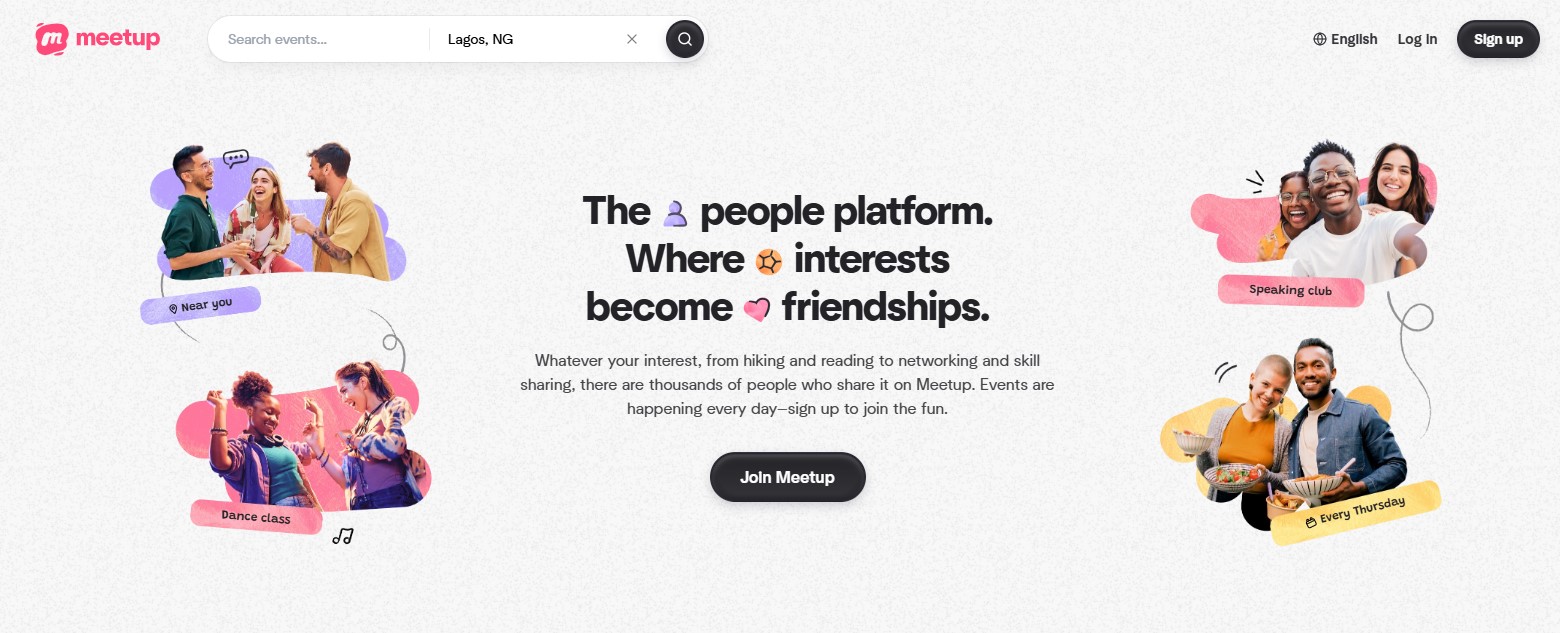
Meetup helps people join or create groups for events, workshops, and networking, both online and offline.
Key Benefits:
- Interest-based groups for professional or personal growth.
- Access to local and global events focused on learning, networking, and collaboration.
- Mentorship and peer connections.
- Skill-building workshops and actionable takeaways.
Meetup is ideal for those seeking face-to-face engagement, experiential learning, and hands-on networking.
4. LinkedIn Groups: Professional Communities and Insights

LinkedIn Groups provide spaces for professionals to share knowledge, advice, and opportunities within targeted communities.
Key Benefits:
- Industry-focused groups tailored to skills and professional interests.
- Knowledge sharing, case studies, and peer advice.
- Discovery of job openings, partnerships, and events.
- Networking with peers, mentors, and leaders in your field.
LinkedIn Groups are best for career-focused networking, industry insights, and targeted professional growth.
5. Quora: Knowledge Through Questions and Answers
Quora is a Q&A platform where users ask questions and share answers on a wide range of topics. Its community-driven structure ensures that content is experience-based and practical.
Key Benefits:
- Answers come from people with firsthand experience or expertise.
- Provides diverse perspectives on professional, educational, and personal topics.
- Encourages thoughtful discussion and problem-solving.
- Users can follow topics to stay informed on areas of interest.
Quora is valuable for individuals seeking advice, lessons, and knowledge from real experiences.
6. Product Hunt: Discover Innovative Tools and Opportunities
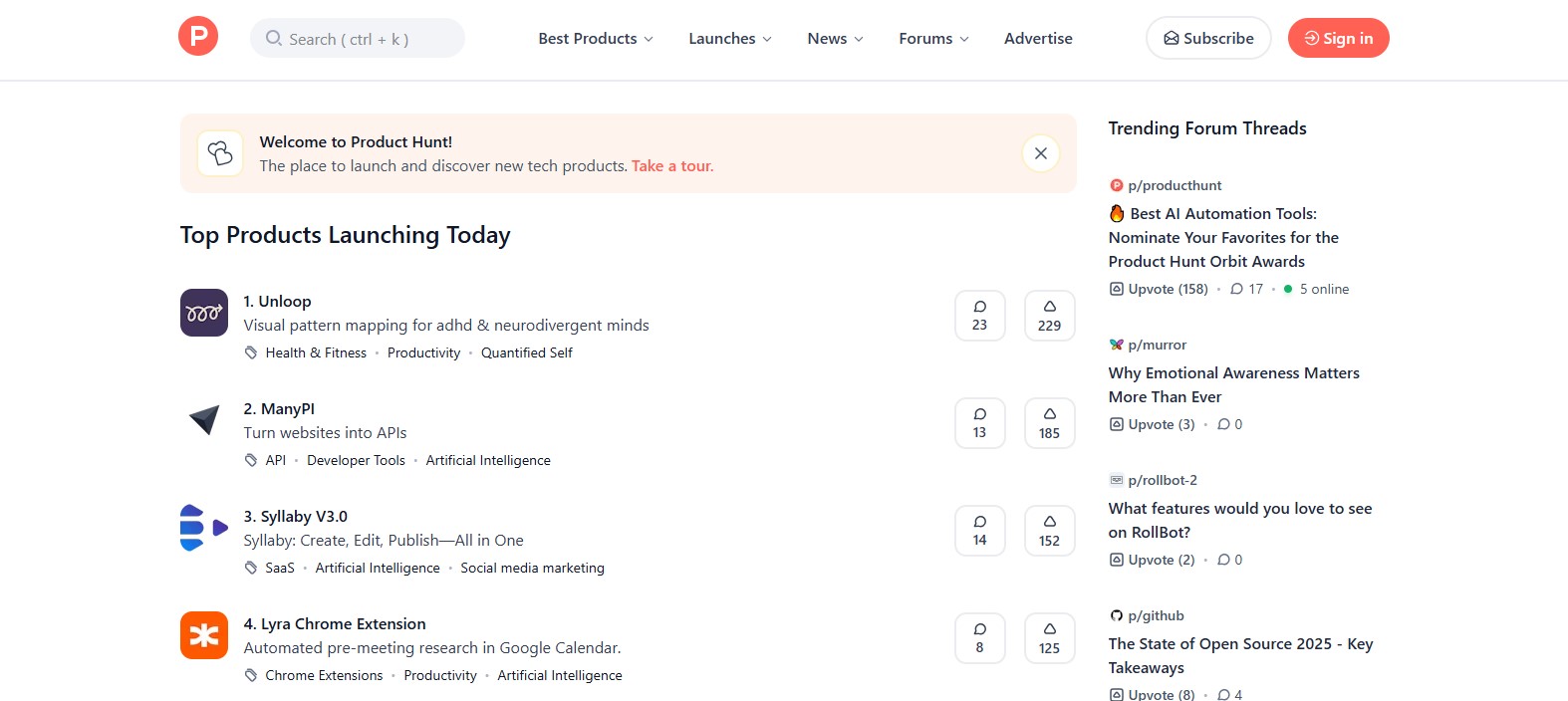
Product Hunt is a community platform for discovering new products, tools, and innovations. Users can share, review, and discuss emerging tech, apps, and resources.
Key Benefits:
- Early access to products and services.
- Community feedback and insights from early adopters.
- Networking with entrepreneurs, creators, and innovators.
- Learning about trends and opportunities in tech and business.
Product Hunt is ideal for professionals, entrepreneurs, and creators who want to stay ahead of trends and discover tools that can enhance their work or business.
Community platforms have evolved into essential spaces for learning, networking, and growth. Platforms like Feedcover, Reddit, Meetup, LinkedIn Groups, Quora, and Product Hunt demonstrate the power of curated content, real stories, and engaged communities.
Starting with Feedcover ensures you have access to authentic stories, actionable insights, and meaningful opportunities, setting the foundation for growth and informed decision-making. Engaging with these platforms empowers individuals to learn, connect, and thrive in both their professional and personal lives.
Related Content
How to Build a Content Engine In 2026 When You Don’t Have a Big Team
The post The Best Community Platforms to Discover Opportunities and Real Stories (Feedcover, Reddit…) appeared first on MarTech Africa.
]]>The post Step‑by‑Step Guide to Using Sentiment Analysis for Brand Growth in Africa appeared first on MarTech Africa.
]]>However, most of these feedback is casual, spontaneous “chatter”, not neatly captured in customer feedback forms. Yet it carries enormous value for brands that know how to interpret it. Despite the growing optimism across Africa, for example, 77% of African youth expect their standard of living to improve over the next two years. Only 11 of Africa’s Top 100 most admired brands are home‑grown, the lowest level since 2011. This gap highlights a critical opportunity: belief in Africa must translate into loyalty to African brands.
This is where sentiment analysis is necessary for brand to help them decode the emotional pulse of everyday conversations, brands can earn genuine preference, loyalty, and ultimately purchase.
What Is Sentiment Analysis?
Sentiment analysis is exactly what it sounds like: measuring how people feel about a brand, product, or campaign, whether positive, negative, or neutral based on what they say online. It goes beyond counting likes or shares. Instead, it interprets the mood behind words, emojis, images, and even videos.
Modern sentiment analysis relies on AI and algorithms to scan massive volumes of content across social media, blogs, and reviews, tagging expressions of emotion like “happy,” “frustrated,” or “meh.” This real‑time feedback provides actionable insights, allowing brands to respond quickly.
The difference today is scale and speed. Real‑time tools can analyse millions of posts in seconds, helping brands spot a brewing crisis, a viral compliment, or a shift in consumer sentiment before it escalates. In fact, a recent statistic shows that 91% of companies with high ROI track sentiment in real time. Studies show that real‑time sentiment tracking can increase sales by up to 20% and improve lead quality by up to 25%.
The Challenges of Sentiment Analysis in Africa
Language & Culture
Africa has over 2,000 languages and dialects, fast‑changing slang, and coded cultural cues. A joking post in Nigerian Pidgin or a meme in Swahili can totally confuse global sentiment tools and result in missed or mis‑interpreted signals. That’s why leading‑edge platforms are starting to adapt, integrating local African languages and even emoji/meme analysis to reflect how Africans actually express themselves online.
Platform Diversity & Data Streams
Digital conversations in Africa span many channels. Brands cannot rely on a single platform like Facebook or X alone. They need tools and processes that are flexible, robust and culturally aware.
Smaller Budgets, Bigger Expectations
Many African brands operate with lean marketing teams and modest budgets. The idea of installing enterprise sentiment‑analysis infrastructure can feel overwhelming. Yet the upside is high: with authenticity and real‑time responsiveness, local brands can catch up fast.
Turning Social Chatter into Product Insights
So how do brands turn streams of online chatter into strategic product or brand decisions? It comes down to recognising patterns, extracting meaning, and acting fast. Here’s a clear, accessible framework used by successful brands:
-
Listen Broadly
Gather data from diverse digital sources; don’t limit yourself to one platform. Consider WhatsApp groups, Instagram Stories, TikTok trends, local forums and review sites. -
Filter Signals from Noise
Use sentiment tools to identify not just major spikes in praise or complaint, but recurring themes, subtle suggestions, and hidden pain‑points. -
Map Sentiment to Action
Connect shifts in online mood to business actions, launching a new feature, tweaking messaging, or quickly resolving common frustrations. -
Act and Adapt
Test product ideas or campaign changes sparked by consumer feedback; measure if sentiment improves after you act. Use sentiment‑shift as a KPI for your next cycle.
Tools and Techniques: Accessible Tech for African Brands
You don’t need a massive team or budget to get started with sentiment analysis today. Consider these accessible tools and action steps, ideal for lean African marketing teams:
-
All‑in‑One Marketing Platforms: Solutions that can ingest feedback from email, SMS, social posts and lead‑gen sources, giving a fuller picture of sentiment across touchpoints while simplifying customer engagement.
-
Local Language Analytics: Platforms tailored to African languages and multilingual NLP solutions increase accuracy when decoding social sentiment.
-
Step‑By‑Step Setup:
-
Use social listening tools to track both tagged and untagged mentions (even basic Google Alerts work).
-
Plug feedback into your marketing‑automation tool so that customer sentiment triggers real‑time responses or campaigns.
-
Implement automated campaigns responding to negative sentiment (e.g., immediate “How can we help?” messages via SMS or email for dissatisfied customers).
-
Measure and iterate: Regularly check sentiment shifts after your campaigns or interventions, refining your approach based on real results.
-
Transforming Customer Sentiment into Product Wins
When brands harness sentiment analysis well, it’s because they act decisively on what they hear. Here’s how notable African brands are closing the loop between insight and action:
-
Product Improvements: A leading African smartphone brand used sentiment from social media and reviews to refine battery and camera features in newer models, directly responding to persistent user feedback across markets like Nigeria and Kenya.
-
Campaign Pivots: A major beverage brand in Nigeria monitors hashtag campaigns and social chatter in real time, enabling the marketing team to swiftly adjust messaging or promotional offers if sentiment takes a negative turn during product launches or festivals.
-
Customer Segmentation: A pan‑African telecom leader segments customers by emotional response and satisfaction metrics gathered via sentiment analysis. This enables hyper‑targeted campaigns and support strategies, improving engagement and loyalty in competitive markets.
The Future of Sentiment Analysis in Africa
Africa’s landscape is unique, complex and full of potential for innovative sentiment analysis:
-
Local Language AI: Projects like Masakhane and platforms such as Izwe AI are making it possible to analyze languages like Igbo, Yoruba, Swahili and more, bridging the gap for millions of consumers whose voices were previously under‑heard.
-
Mobile‑First Analytics: As mobile remains the main internet access point, brands are exploring sentiment monitoring directly through SMS and WhatsApp feedback streams.
-
Ethical Data Handling: With AI scaling, there’s growing awareness around privacy, transparency and the need for consent as sentiment‑data is collected and interpreted.
-
Connected Platforms: Marketing‑automation tools will increasingly integrate real‑time sentiment triggers, so product feedback leads straight to action, whether that means launching a new campaign, fixing a pain‑point or sending a well‑timed reassurance message.
For Africa’s tech‑forward marketers, the future means smarter, more localized and ultimately more connected conversations with customers. Mobile‑first strategies, AI‑driven insights and real‑time automation are making it possible for brands to meet people where they are, on their terms, in their language, and at the very moment it matters. Those who adapt and listen closely will not only drive results but help build a marketing landscape that’s both innovative and genuinely connected across every corner of the continent.
Related Content
How to Build a Content Engine In 2026 When You Don’t Have a Big Team
The post Step‑by‑Step Guide to Using Sentiment Analysis for Brand Growth in Africa appeared first on MarTech Africa.
]]>The post Why African Ads Go Viral: Psychology, Culture, and Social Media appeared first on MarTech Africa.
]]>In South Africa, digital advertising revenue hit an all-time high of ZAR 17.8 billion (≈US$1.1B) in 2023, giving online platforms nearly 40% of the total ad market. Nigerian brands are following the same trajectory: by 2025, digital channels accounted for over US$340 million of the country’s nearly US$1 billion ad spend, with online video alone surging by 49% year-on-year.
This wave of digital transformation has created the perfect environment for virality. Ads are shared, remixed, and amplified through WhatsApp groups, Instagram Reels, TikTok challenges, and Facebook feeds.
With nearly 192 million adults in Sub-Saharan Africa accessible through Meta platforms alone, and youth audiences driving trends, African campaigns that strike the right cultural and emotional chord can leap from a single post to continent-wide recognition almost overnight.
Why African Ads Go Viral
1. The growth of social connectivity
Africa’s viral ad culture is fueled by the continent’s rapid rise in mobile-first connectivity. Most people came online through smartphones, making social platforms and messaging apps the main entry point to the internet. Nigeria now counts over 107 million internet users, nearly half its population, while South Africa has 50.8 million, with almost 79% penetration.
2. Emotional arousal drives sharing not just “feelings”
Research shows that content goes viral when it sparks high-arousal emotions rather than low-arousal ones like sadness or resignation. In other words, people are more likely to hit “share” when they feel energized rather than drained.
A well-known study published by the Marketing Science Institute (MSI) found that emotions linked to excitement and amusement consistently increased the likelihood of content being shared.
African ads tap into this psychology by leaning on emotions that feel immediate and communal. Campaigns that celebrate national pride, highlight local humor, or remix nostalgic cultural moments activate emotional energy.
For example, humorous Nollywood-inspired ads or music-driven campaigns tied to Afrobeats often go viral across timelines because they spark joy and collective pride at the same time.
3. Storytelling
Across the continent, oral traditions response performances have always been designed to be memorable, rhythmic, and repeatable. These elements map neatly onto today’s digital formats.
Modern ads that use this naturally thrive on short-form platforms like Instagram Reels, TikTok, and YouTube Shorts. The rhythm of storytelling makes them easier to remember, retell, and remix, which are essential mechanics of virality.
As one analysis on digital storytelling trends notes, campaigns that echo traditional narrative structures see stronger engagement because they “invite audiences to become part of the story” . In Africa, where storytelling is community-building and ads that borrow these cues feel both familiar and fresh.
This is why a 30-second skit in Pidgin English or a short-form ad with a proverb-driven punchline can spread across with the same power oral tales once carried across village squares.
4. Social currency and identity
Marketing scholar Jonah Berger’s research on “social currency” shows that people share content when it makes them look witty, informed, or connected. Sharing becomes a way to signal identity. In Africa, this plays out vividly because ads that weave in local slang, reference cultural touchstones, or nod to inside jokes give audiences a chance to say, “I get this, I belong.”
As Consumer Researcher notes, “content that affirms social identity travels faster because people use it to strengthen bonds” . African brands are handing them cultural currency to spend in their own networks which is a powerful incentive to share.
5. Distribution differences
One of the biggest distinctions in Africa’s viral ecosystem is where content spreads. Unlike Western markets, where public feeds dominate, messaging apps like WhatsApp and Telegram are central to distribution. Ads often gain traction not through trending hashtags but through private group forwards family chats, alumni circles, and neighborhood networks where trust and tight social bonds amplify sharing.
This shift shapes creative choices. Short, vertical videos optimized for mobile are more likely to travel across these networks. Captions and sound cues that still make sense with the volume off are critical, since many people watch (and forward) ads silently. In this way, African virality is less about algorithmic feeds and more about human networks acting as accelerators.
6. Locality and Authenticity
While glossy global-style ads have their place, it’s often the locally rooted, culturally fluent ones that go viral in Africa. Campaigns that use local languages, familiar settings like markets or buses, and everyday humor resonate because they feel authentic like something “from the neighborhood.”
In Nigeria especially, the most memorable ads are those that tap into shared nostalgia or everyday life, quickly becoming cultural reference points people are eager to share.
7. Examples & learning from the big hits
Across Africa, campaigns that blend emotional hooks, cultural cues, and shareable formats have consistently gone viral. The pattern is clear: capture attention in the first 3–5 seconds, deliver a culturally resonant payoff, and make sharing effortless with short, memorable content.
Three repeatable strategies drive virality: nostalgia to evoke pride, humor or satire to encourage sharing, and inspirational content for mass engagement. These principles offer a roadmap for marketers aiming to create campaigns that resonate locally while spreading widely.
8. Risks
A practical caveat, internet access across Africa is not uniform, and in some countries it can be unstable or politically constrained. Internet shutdowns or platform blockages have occurred, temporarily suppressing content and sometimes amplifying it when connections return.
Marketers need to account for these realities, building campaigns with backup distribution plans and local moderation strategies to navigate connectivity issues and legal constraints
Practical checklist to design more shareable African ads
- Lead with a high-arousal hook (emotion or curiosity) in the first 3 seconds.
- Use local language/slang or visual cultural cues so the audience recognizes themselves.
- Make the message re-tellable: a clear setup payoff people can describe in a sentence.
- Optimize for messaging apps: short runtime, captions, and strong visuals without sound.
- Include an element of social currency like a joke, reference, or “I-was-there” nod.
- Test in small, local groups before scaling to discover cultural edge-cases.
Virality in Africa happens when content reaches people through communal networks, shared culture, and emotions that naturally encourage active sharing. For brands, the key lesson is simple: combine universal psychological triggers with authentic local storytelling and messaging-platform‑friendly distribution strategies.
Related Content
Top 10 Most Memorable Nigerian Adverts of the Last 10 Years
The post Why African Ads Go Viral: Psychology, Culture, and Social Media appeared first on MarTech Africa.
]]>