The post Why African Legacy Brands Are Losing Customer Loyalty in 2025 appeared first on MarTech Africa.
]]>Yet today, many of these once-unshakable brands are struggling to hold their ground. Consumer behavior is shifting at unprecedented speed, shaped by a younger, more digitally savvy generation, increased competition, and rapidly changing market conditions. New entrants, nimble startups, regional challengers, and global players are seizing opportunities that legacy brands have been slow to adapt to.
This begs the question: why are African legacy brands losing customer loyalty? And perhaps more importantly, what lessons can marketers and business leaders learn from this shift to not only survive but thrive in the new consumer era?
Here are some of the reasons why brands are loosing customer loyalty in 2025
1. Changing Consumer Expectations
Today’s consumers, especially millennials and Gen Z are driven by experience, convenience, and personalization. Loyalty is about which brand offers the best value in the moment.
For example, Nigerian consumers who once flocked to Mr Biggs now prefer Chicken Republic or Domino’s Pizza because these competitors offer fresher menus, modern outlets, and better digital ordering systems. Legacy brands often fail to keep up with rising expectations, leading to a slow erosion of loyalty.
2. The Digital Disruption
Digital transformation has reshaped how Africans discover, engage with, and buy from brands. With mobile penetration in sub-Saharan Africa projected to reach 615 million users by 2025 (around 50% of the region’s population), mobile touchpoints like apps, social media, and e-commerce are now non-negotiable.
Unfortunately, many legacy brands were slow to embrace digital. By the time they built apps or optimized online experiences, younger brands had already won over consumers with seamless mobile-first solutions.
3. Global vs. Local Competition
African legacy brands also face dual competition from global entrants bringing world-class branding and local startups offering cultural relevance.
- Global fast-food brands like KFC have scaled aggressively with standardized menus, efficient service, and recognizable branding.
- Local competitors, meanwhile, adapt more quickly to consumer tastes and cultural nuances — something many older brands struggle with.
The result is a squeeze: legacy brands lose relevance in both directions, unable to match global standards or local agility.
4. The Shift in Consumer Loyalty Behavior
Consumer loyalty itself has transformed. According to PwC’s Future of Customer / Global Consumer Insights surveys, many consumers now say they switch brands more often than before the pandemic, driven by price sensitivity, product variety, and the convenience of digital options.
Legacy brands, historically relying on reputation and tradition, are now exposed: their past strengths are no guarantee of future loyalty.
5. Outdated Brand Positioning
Another key factor is the perception that legacy brands are “stuck in the past.” Outdated logos, uninspiring campaigns, and traditional marketing methods fail to resonate with modern audiences.
Contrast this with startups that position themselves around community, storytelling, and innovation. For instance, new African fashion brands leverage Instagram and TikTok to tell cultural stories, while older fashion houses often rely on traditional.
Case Study: Mr Biggs in Nigeria
Once the pride of Nigeria’s fast-food industry, Mr Biggs dominated in the 1990s and early 2000s. It was more than a restaurant; it was a cultural experience. Yet by the 2010s, the brand’s outlets dwindled.
Why?
- Outdated outlets and inconsistent quality.
- Poor digital adoption compared to new entrants.
- A failure to adapt menus and experiences to changing consumer lifestyles.
This story mirrors the struggles of many African legacy brands: slow to adapt, and quick to lose once-loyal customers.
Related Content: What Happened to Mr. Biggs and Lessons to be Learnt
What Legacy Brands Can Do to Bounce Back
The decline of legacy brands in Africa isn’t set in stone. While many have struggled to keep up, there are practical ways for them to reinvent themselves, reconnect with consumers, and reclaim lost ground. Here’s how:
1. Embrace Digital Transformation
Today’s consumers live on their phones, and any brand that fails to meet them there risks irrelevance. Legacy brands must go beyond traditional service delivery and invest in mobile apps, e-commerce platforms, and digital tools that make customer journeys seamless. if ordering food, renewing a subscription, or accessing financial services, frictionless digital experiences are no longer a luxury, they are the baseline.
2. Reimagine Brand Identity
A strong legacy does not mean being stuck in the past. Brands can signal relevance to younger audiences by refreshing their logos, redesigning physical spaces, and leaning into modern marketing channels like social media, influencer collaborations, and experiential campaigns. These steps reinterpret it for a new generation. Think of it as breathing new life into a familiar story.
3. Prioritize Customer Experience
Product alone no longer guarantees loyalty. What keeps customers coming back is how they feel when they interact with a brand. Faster service, personalized offers, and loyalty programs that truly reward customers can make a huge difference. Every touchpoint should be designed to make people feel valued and understood.
4. Stay Agile with Consumer Trends
Consumer preferences shift rapidly, and brands that cling to rigid models are left behind. Legacy players need systems to listen, adapt, and experiment quickly. This means monitoring trends, testing new campaigns, and creating feedback loops that turn customer insights into action.
5. Invest in Community & Culture
Perhaps the greatest strength African brands can tap into is cultural connection. Today’s consumers don’t just buy products; they buy into stories, pride, and shared identity. Legacy brands can reignite loyalty by embedding culture into their messaging, celebrating local heritage, and engaging meaningfully with communities. Sponsorships, storytelling, and campaigns that reflect social realities can transform them from just businesses into movements people want to belong to.
Conclusion
The decline of African legacy brands isn’t just about poor management or rising competition but failing to keep pace with the evolving customer. Today’s loyalty is fragile, shaped by convenience, technology, and cultural relevance. For legacy brands, the choice is clear: adapt, innovate, and reconnect with consumers or risk becoming a nostalgic memory.
The post Why African Legacy Brands Are Losing Customer Loyalty in 2025 appeared first on MarTech Africa.
]]>The post Customer Retention Strategies That Work in African Markets (2025 Guide) appeared first on MarTech Africa.
]]>Retaining existing customers drives long-term profitability and brand advocacy. Research by Bain & Company shows that increasing customer retention rates by just 5% can boost profits by 25% to 95%. This is especially important in African markets, where trust, relationship-building, and local context play a major role in shaping consumer behavior.
Here are 8 Customer Retention Strategies that work in African markets
Personalization and Customer-Centric Experiences
One of the strongest ways to retain customers in Africa is by creating personalized experiences. African consumers are highly diverse, and their purchasing habits are shaped by cultural, linguistic, and regional differences. Businesses that recognize and adapt to these variations are more likely to keep customers coming back.
E-commerce platforms like Jumia, for example, personalize recommendations based on browsing history and location. Fintech firms such as Flutterwave and Paystack tailor their services to suit local realities by providing regional payment methods. When customers feel that a brand understands their unique needs, they are far more likely to remain loyal.
Personalized birthday discounts, culturally relevant campaigns, and even location-based offers are simple but effective ways of showing customers that they are valued as individuals rather than just numbers.
Loyalty Programs That Reward Everyday Behavior
Another proven customer retention strategy in African markets is the use of loyalty programs. Unlike traditional models in other regions, African consumers respond more positively to simple, practical, and accessible rewards. Mobile operators such as MTN have tapped into this through initiatives like Y’ello Rewards, while leading banks have introduced cashback and point-based systems to keep customers engaged.
The rise of platforms that offer digital reward services like Yournotify has also made it easier for businesses to design loyalty programs tailored to the African context. Reward system resonates strongly in African markets where consumers place high value on practical benefits. By making loyalty programs simple, transparent, and directly relevant to people’s daily lives, businesses can significantly increase customer retention.
Exceptional Customer Service
Customer service is another powerful driver of retention in African markets. In many industries, poor service is still a common complaint, and businesses that invest in fast, responsive, and empathetic support quickly stand out. Companies like Interswitch and GTBank have built strong reputations not only for their products but also for the quality of their customer support. These brands demonstrate that when customers feel heard and supported, they are more likely to stay loyal.
For African businesses, investing in customer service means training staff regularly, implementing customer relationship management (CRM) systems, and offering support through multiple channels, including WhatsApp, phone calls, and email. Customers want to know that if something goes wrong, they can count on quick and effective resolution. This assurance builds trust, which in turn fosters loyalty.
Building Trust Through Transparency
Trust is one of the most critical factors influencing customer retention across Africa. In markets where fraud, hidden charges, and poor service delivery are common challenges, brands that prioritize transparency earn long-term loyalty. For instance, fintech firms often publish transparent fee structures and ensure users know exactly what they are paying for. Logistics providers like GIG Logistics have also gained loyalty by offering real-time delivery tracking, which reassures customers that their purchases are safe.
Transparency is is also about communication. When businesses openly inform customers about potential delays, product shortages, or service changes, they demonstrate honesty. Customers are much more likely to forgive mistakes if they feel a brand has been upfront with them rather than trying to conceal the truth.
Leveraging Community and Cultural Connections
African consumers are deeply community-oriented, and businesses that tap into this social fabric often find it easier to retain customers. Brands such as Coca-Cola Africa and Dangote Group have consistently engaged in community initiatives, sponsorships, and social programs that align with cultural values. By doing so, they go beyond transactions and become part of the consumer’s lifestyle.
A strong community connection means that customers see the brand not only as a provider of goods or services but also as a partner that understands their culture and contributes positively to their society. This creates an emotional bond that makes it harder for competitors to lure them away.
Digital Engagement and Automation
The rapid growth of mobile penetration and internet usage in Africa has also transformed customer retention strategies. Digital engagement tools such as chatbots, mobile apps, and automated messaging systems are helping businesses maintain regular communication with customers. E-commerce platforms like Konga, for instance, use SMS and email automation to keep customers updated on orders, restocks, and promotions.
However, digital engagement must strike the right balance. Automation is effective for routine updates and reminders, but it should not replace the human touch in situations where customers need empathy or complex problem-solving.
African customers appreciate efficiency, but they also value genuine human interaction. Brands that successfully integrate both are better positioned to keep their customers engaged and loyal.
Continuous Value Creation
Customer retention is about consistently delivering value. African consumers stay loyal to brands that not only meet their immediate needs but also continue to educate, inform, or empower them. Platforms like PiggyVest provide more than just savings solutions; they also educate users on financial literacy through blogs, newsletters, and webinars. By doing this, they position themselves as partners in their customers’ growth journeys.
This approach keeps customers invested in the brand because they feel they are gaining more than a product or service, they are gaining knowledge, empowerment, and opportunities. Continuous value creation makes it much harder for competitors to replace you in your customers’ lives.
Listening and Acting on Feedback
Finally, businesses that retain customers in Africa are those that actively listen and respond to customer feedback. Airlines such as Ethiopian Airlines frequently conduct surveys to improve service delivery, while smaller businesses use social media polls to gather insights from their communities.
When customers see that their opinions matter and that businesses actually act on their suggestions, they develop stronger loyalty. A consistent feedback loop ensures that companies remain aligned with the evolving needs and expectations of their market.
In African markets, customer retention strategies require more than discounts or flashy campaigns. They are built on personalization, trust, cultural alignment, community connections, and consistent value delivery.
Customers in Africa want to feel valued, understood, and supported. Businesses that can consistently deliver on those expectations will not only retain customers but also transform them into lifelong advocates. In 2025 and beyond, this will be the true competitive edge.
Related Content
Customer Engagement vs. Customer Experience: What’s the Difference?
The post Customer Retention Strategies That Work in African Markets (2025 Guide) appeared first on MarTech Africa.
]]>The post Customer Data Platform (CDP) Explained: What It Is, How It Works, and Why It Matters appeared first on MarTech Africa.
]]>A CDP helps businesses turn scattered customer information into a single, unified source of truth, enabling smarter marketing, personalized experiences, and better decision-making.
What Is a Customer Data Platform (CDP)?
A Customer Data Platform (CDP) is a type of software that collects, organizes, and unifies customer data from multiple sources into a single, comprehensive profile for each customer. Unlike other data management systems, CDPs are designed to give marketers, sales teams, and customer experience managers direct access to structured, real-time customer insights without heavy IT involvement.
It gathers information from different tools (like CRM, email marketing, websites, mobile apps, and offline transactions), cleans it up, removes duplicates, and merges everything into one central system.
Key Characteristics of a Customer Data Platform
- Unified customer profiles: Combines data from multiple touchpoints (web, mobile, email, POS, social media, etc.) into a single identity.
- Persistent database: Stores data long-term, creating a historical record of customer behavior.
- Accessible to other tools: Shares data with marketing automation, CRM, analytics, and advertising platforms.
- Marketer-friendly: Unlike complex data warehouses, CDPs are built for non-technical users.
How a Customer Data Platform Works
1. Data Collection
The first step in the functioning of a Customer Data Platform is the collection of data from multiple sources. A CDP integrates seamlessly with both online and offline systems to ensure that no customer interaction goes unnoticed.
Online sources include websites, mobile applications, e-commerce platforms, digital advertising, and email marketing campaigns, all of which capture a customer’s digital footprint.
Offline sources such as point-of-sale (POS) systems, loyalty programs, and even call center logs add another layer of valuable information. In addition, many CDPs connect with third-party providers to incorporate demographic data, or external analytics, enriching the dataset further.
2. Data Unification & Identity Resolution
Once the data is collected, the CDP moves to its most critical function which is unifying fragmented information into a single customer view (SCV). Customers often interact with a brand using different identifiers such as personal emails, work emails, phone numbers, cookies, or device IDs, which can result in multiple, disconnected records.
The CDP solves this by applying identity resolution techniques that match and merge these identifiers, removing duplicates and inconsistencies along the way.
This process creates what is often called a “golden record”, a reliable and complete profile of the customer with all relevant details in one place.
3. Data Enrichment
After the data has been unified, the CDP doesn’t just stop at basic information. It enhances each profile with richer attributes to make it more useful. This enrichment process can include demographic information like age, gender, and location, as well as behavioral data such as the number of pages viewed, purchase history, or engagement frequency.
Advanced CDPs also use predictive modeling to estimate future behaviors such as the likelihood of churn, the probability of a repeat purchase, or a customer’s affinity for certain products. By enriching profiles with both descriptive and predictive insights, businesses gain a deeper understanding of their customers.
This transforms raw data into actionable intelligence that can directly influence marketing strategies and customer experience initiatives.
4. Segmentation & Audience Building
Once customer profiles are unified and enriched, the CDP allows marketers to group them into dynamic segments based on shared characteristics or behaviors.
Segmentation can range from identifying high-value customers who consistently make purchases or isolating first-time buyers who need nurturing. It can also highlight frequent website visitors who browse often but never complete a purchase.
The strength of CDP-driven segmentation lies in its dynamism. These audience groups update automatically as new data flows in, ensuring that businesses always target customers with the most up-to-date information.
The segments can then be used to run highly targeted campaigns across channels such as email, SMS, paid advertising, or mobile push notifications, dramatically improving relevance and engagement rates.
5. Activation
The final step in the CDP process is activation, which means making the data available across different business tools so it can be acted upon. Once unified, enriched, and segmented, customer data is pushed into platforms where it can drive real-world outcomes.
For example, detailed profiles can be shared with a Customer Relationship Management (CRM) system to empower sales teams with deeper insights. Marketing automation tools can use the data to trigger personalized campaigns that reflect each customer’s journey.
Advertising platforms can build lookalike audiences based on high-value customer segments, and analytics dashboards can provide performance measurement rooted in accurate, unified data.
Why a Customer Data Platform Matters
1. Personalized Customer Experiences
A CDP makes personalization possible by ensuring every touchpoint. These could be in areas like emails, ads, or recommendations that reflects the customer’s unique history and preferences.
2. Eliminates Data Silos
Many businesses struggle with data stored in disconnected systems. A CDP breaks down silos by consolidating everything into one platform, making data more usable.
3. Improved Marketing ROI
By targeting the right audience with the right message, businesses waste less budget on irrelevant ads or campaigns. For example, instead of sending a blanket promotion, a retail brand can target only frequent buyers of sportswear with athletic gear discounts.
4. Supports Compliance and Privacy
With regulations like GDPR and CCPA, businesses need to manage consent and protect customer data. Many CDPs include built-in features for data governance, making compliance easier.
5. Better Customer Retention
By analyzing behavior and predicting churn, a CDP helps businesses proactively engage at-risk customers with loyalty programs or special offers.
6. Empowers Marketing Teams
Unlike traditional data warehouses that require IT intervention, CDPs are built with user-friendly dashboards and tools. This gives marketers direct access to insights without delays.
Conclusion
In an era where customer experience is a competitive differentiator, businesses can’t afford to rely on fragmented data. A Customer Data Platform (CDP) ensures that every marketing, sales, and service decision is backed by a complete, accurate understanding of the customer.
Related Content
Digital Asset Management (DAM) Software in 2025
The post Customer Data Platform (CDP) Explained: What It Is, How It Works, and Why It Matters appeared first on MarTech Africa.
]]>The post How PiggyVest Built Deep Customer Relationships to Grow Its Brand in Africa appeared first on MarTech Africa.
]]>This article explores how PiggyVest did just that and how its customer-centric approach became the bedrock of its brand identity across Africa.
1. Solving a Real Problem with Empathy
PiggyVest was inspired by a 2015 viral tweet by user Oluwafisayomi, who shared how she locked money in a wooden box to avoid spending it. Instead of dismissing the tweet, co-founders Somto Ifezue, Odunayo Eweniyi, and Joshua Chibueze saw a real need: young Nigerians wanted to save, but lacked discipline and tools. They built Piggybank.ng to mimic the wooden box but digitally. That foundational empathy shaped everything that followed.

2. Prioritizing Financial Literacy For Customers
PiggyVest didn’t just build tools for saving and investing money, it taught users how to use money better. The brand used an educational approach to built trust and positioned PiggyVest as a financial ally which kept users engaged long-term. Some Examples of how they achieved this includes:
- The PiggyVest Blog where they share weekly tips on budgeting, savings, and investment.
- Their “Money Personality Quiz” helped users understand their financial behavior in a fun, interactive way.
- In 2022, they launched a “#SavingsChallenge” series on Instagram to guide users toward consistent habits.
- Their annual “Money Matters with PiggyVest” report reveals insights into how Nigerians save and spend money. A content marketing masterclass that boosts both education and brand credibility.
3. Building a Strong, Relatable Voice
PiggyVest’s X account (@Piggyvest) is known for being humorous, contextual, and deeply local. The brand understands that their customers are humans with certain traits and reside in certain location, so they ensure that their content is localized and they speak to these customers in the language that they understand. For example, they use popular Nigerian slang like “sapa” (being broke) to talk about saving.
This “relatable content” strategy creates a sense of community and belonging, which turns customers into brand advocates. Their social media accounts feel less like corporate handles and more like a smart friend giving you real money advice.
4. Customer Feedback as a Growth Engine
Many PiggyVest features came from direct user requests. The team regularly ran surveys, monitored user comments, and even responded in real time to issues or suggestions. This open communication helped shape product features like Flex Dollar, target savings groups, and more. By involving users in product evolution, PiggyVest created a sense of co-ownership. People felt like the app was theirs and that’s powerful branding.
5. Transparency and Trust-Building
In Nigeria’s fintech space, trust is currency. PiggyVest earned it by being open and proactive. The brand shared clear terms of service, regular financial updates and security assurance messaging to keep users informed and reassured.
Examples:
- After changing its name from Piggybank to PiggyVest in 2019, it communicated the rebrand clearly, emphasizing growth and future offerings.
- Following the failed investment platform MBA Forex scandal (which affected Nigerian trust in fintechs), PiggyVest publicly clarified their investment process and partners to reassure users.
- Partnered with AIICO Capital, a registered fund manager, to guarantee investments, a move they clearly explained on their platform.
6. Showcasing Real Success Stories
PiggyVest constantly shares testimonials from real users who achieved savings goals. Rather than rely on influencer hype or flashy ads alone, PiggyVest invested in user-generated content and real-life testimonials. These stories weren’t just inspirational, they also stood as proof of value which made prospective users believe they could achieve similar results.
Examples:
- In their 2023 “Money Matters” report, they spotlighted a user who saved ₦500,000 in 8 months to fund a master’s degree.
- They launched the #MyPiggyStory hashtag on social media to let users share how the platform helped them save for cars, rent, laptops, and even weddings.
- On Instagram and LinkedIn, they’ve featured creators, entrepreneurs, and students who used PiggyVest to achieve major financial milestones.
7. Community Building Through Challenges & Events
Piggyves came up with challenges to give their users a shared mission. They utilized both offline and online events which helped humanize the brand even further. We can say PiggyVest created a tribe of loyal users, not just app downloads. Some of these coommunity engagements include:
- Their “Savings Streak Challenge” encourages users to save daily or weekly and win rewards if they maintain consistency.
- Annual Year-End Savings Challenge: In December, they push users to complete their goals with leaderboards and gamification.
- The 2021 PiggyVest End-of-Year Party (PiggyVersary) was an invite-only event for top savers, a community reward and loyalty play.
- Their “Refer & Earn” program incentivizes users to bring others in, expanding the brand organically.
PiggyVest’s journey offers a lesson to any African startup looking to build a beloved brand: Start with the people. Don’t just market a product—solve a real problem, speak the user’s language, involve them in your journey, and keep the relationship alive long after signup. That’s how PiggyVest turned users into loyal fans, and a fintech app into one of Africa’s most recognized digital brands.
Related Content
What Happened to Mr. Biggs and Lessons to be Learnt
The post How PiggyVest Built Deep Customer Relationships to Grow Its Brand in Africa appeared first on MarTech Africa.
]]>The post Customer Engagement vs. Customer Experience: What’s the Difference? appeared first on MarTech Africa.
]]>What Is Customer Engagement?
Customer engagement refers to the interactions and touchpoints a brand has with its customers and how actively customers participate in these interactions. It’s about building relationships, driving connections, and fostering loyalty over time. A business that engages well with its customers builds trust, encourages repeat business, and creates brand advocates.
Examples of Customer Engagement:
- Responding to comments on social media
- Sending personalized email campaigns
- Hosting webinars or live Q&As
- Offering loyalty programs
- Creating community forums or online groups
Customer engagement is all about how your brand communicates and interacts with your audience to build ongoing, meaningful relationships.
What Is Customer Experience?
Customer experience (CX) is the sum total of a customer’s perception of a brand, based on every interaction throughout the customer journey, from the first time they visit your website to post-purchase support. For businesses that offer services, having experience is super important since they aren’t selling tangible products. Their worth lies in the services they deliver. Providing a smooth and easy experience is essential for keeping customers and standing out from the competition.
Key Components of Customer Experience:
- Website usability and design
- Speed and friendliness of customer service
- Product or service quality
- Checkout and delivery process
- Follow-up and feedback collection
Customer experience focuses on how a customer feels at each stage of their interaction with your brand.
Why Both Matter for Business Growth
Today’s customers are more empowered than ever. They don’t just want to buy a product, they want to connect with the brand and feel valued throughout their journey. Here’s why integrating both customer engagement and customer experience strategies is crucial:
1. Stronger Brand Loyalty
When customers feel genuinely connected to a brand through regular and meaningful engagement, and that connection is reinforced by consistently positive experiences, they begin to trust the brand. This trust becomes the foundation of loyalty.
Engaged customers are more likely to forgive small missteps, participate in community activities (like surveys or beta programs), and remain loyal even when competitors try to lure them away. Over time, these loyal customers often evolve into brand advocates, willingly sharing their experiences with others and defending your brand when needed.
2. Higher Customer Lifetime Value (CLV)
Customer Lifetime Value is a critical metric for sustainable growth and it is facilitated by both engagement and experience. A customer who is actively engaged is more likely to interact with content, respond to upsell and cross-sell offers, and remain open to future purchases. However, that only works if their experience with your brand continues to meet or exceed expectations.
3. Improved Word-of-Mouth & Referrals
In the age of online reviews and social media, customer sentiment spreads very fast, and positive sentiment is a powerful marketing tool. Customers who are both engaged (emotionally invested) and satisfied (experientially fulfilled) are more inclined to share their stories with friends, family, and peers. They post reviews, recommend your brand on social platforms, and refer others through word-of-mouth or referral programs.
This kind of organic advocacy is far more effective and trusted than paid ads. It can drastically reduce customer acquisition costs and expand your reach through authentic, trusted voices.
4. Valuable Customer Insights
Customer engagement generates behavioral data, Giving insights into what content they click on, how they interact with your brand on social media, what emails they open, and so on. On the other hand, customer experience feedback provides qualitative insights: how customers feel about their journey, what pain points they encounter, and what they value most.
When combined, these data streams offer a holistic view of your customer base. You can use this to identify trends, segment audiences, improve service design, and create smarter marketing strategies.
How to Align Engagement with Experience
To deliver maximum value, customer engagement efforts must reinforce not detract from the overall customer experience. Here’s how to align the two effectively:
- Personalize Interactions Using Customer Data
Don’t treat customers like numbers. Use behavioral and demographic data to personalize communication across channels, such as emails, push notifications, website content and social media. When customers receive messages and offers that are relevant to their needs, preferences, and past interactions, they’re more likely to engage.
- Ensure Consistency Across All Channels
A customer might interact with your brand via your website, mobile app, social media, customer service, or in-store and they expect a seamless, unified experience across all of them.
This means your brand voice, messaging, and service quality should be consistent regardless of the platform. Conflicting information or fragmented service can create friction and reduce trust.
- Ask for Feedback and Act on It
Engaged customers appreciate being asked for their opinions, and gathering feedback shows that you value their voice. But what matters the most to them is when you act on that feedback.
Use post-purchase survey tools and user experience interviews to gather insights. Implement changes based on what you learn and communicate those changes e.g: “Based on your feedback, we’ve improved…”.
- Train Your Team for Empathy, Speed & Clarity
Your frontline staff and customer service teams are key players in both engagement and experience. Train them to approach every interaction with empathy, listening actively and responding thoughtfully. Equip them with tools and scripts that prioritize speed and clarity, ensuring issues are resolved efficiently and customers feel respected.
A helpful support interaction can turn a frustrated customer into a loyal one, reinforcing both trust and engagement.
Customer engagement and customer experience are two sides of the same coin. One is active involvement, the other is emotional perception and together, they shape how your customers view your brand. Businesses that understand and invest in both don’t just sell products; they build lasting relationships. In a competitive marketplace, that can be your greatest advantage.
Related Content
How Martech Companies are Enhancing Customer Experience
The post Customer Engagement vs. Customer Experience: What’s the Difference? appeared first on MarTech Africa.
]]>The post How Martech Is Driving E-commerce Growth In Africa: Top Tools & Strategies for Customer Acquisition In 2025 appeared first on MarTech Africa.
]]>Have you ever wished you could read your customers’ minds?
If you’re running an e-commerce brand or part of a startup sales team in Africa, chances are you have especially when you’ve tried everything and still struggle to attract or retain the right customers.
Customer acquisition is no longer as straightforward as it used to be. Consumers are evolving, markets are getting crowded, and attention spans are shorter than ever. With over 61% of marketers globally saying it’s their biggest challenge, many teams are trying to solve it.
In Africa’s growing e-commerce space, which is expected to hit $75 billion by 2025, this pressure is even greater. Sales teams are dealing with ad fatigue, low conversion rates, and the constant need to keep up with changing buyer habits.
This is where Marketing Technology (aka Martech) comes in as a game changer. Martech refers to tools and systems that make it easier to reach, engage, convert, and keep customers.
In this article, we’ll explore how Martech can help your brand attract, engage, and convert more customers in 2025 and why it’s becoming a must-have for e-commerce growth in Africa.
The Real Customer Acquisition Struggles African E-commerce Brands Face
Customer acquisition in Africa’s e-commerce sector is both costly and complex, with brands facing a range of challenges. Let’s dive into the key struggles you’re likely dealing with:
1. High Customer Acquisition Costs (CAC)
Many African e-commerce brands now spend $29 to $35 to acquire just one customer. Rising ad costs, low trust levels, and high competition make it harder for lesser-known brands to convert first-time buyers.
The result? Bloated acquisition costs, low ROAS (Return on Ad Spend), and thinner profit margins with little return to show for it.
2. Lack of Personalization Across the Customer Journey.
Many African e-commerce brands lack the tools or systems to personalize the customer journey. This leads to generic emails, irrelevant product suggestions, and checkout flows that overlook past behavior. When experiences feel impersonal, customers lose interest and drop off, often just before converting.
3. Fragmented Customer Data
If you can’t see the full picture of your customer’s journey, it becomes incredibly hard to serve them well. A common challenge across African e-commerce businesses is disjointed data. You have bits of information scattered across social media, websites, etc.
Without a centralized system or a clean customer profile, you waste time and budget trying to guess what your customer wants, rather than using real insights to make informed decisions.
4. Manual Processes That Kill Growth
A lot of sales teams in e-commerce still rely heavily on spreadsheets, manual outreach, or checking multiple platforms to complete a single task. These manual processes not only slow down your sales team but also limit the ability to scale and serve customers efficiently. Ultimately, this leads to a low conversion rate and a dip in revenue.
5. Poor Follow-Up and Lead Nurturing
Capturing a lead is just the first step. What happens after determines if that lead turns into revenue. In B2B e-commerce, where decisions take longer, consistent follow-up is key. Yet most teams still lack the systems to keep leads warm—no automated nurturing, no timely reminders, no structured outreach. Without this, conversations stall, interest fades, and valuable opportunities slip away.
These challenges can feel overwhelming for any e-commerce brand owner. However, integrating Martech into your customer acquisition strategy can simplify the process, helping you attract and convert customers more effectively.
How Martech Solves These Pain Points (Across the Customer Journey)
Now, let’s look at how Martech can support your marketing team at each stage of the customer journey:
1. Attract
Gone are the days of struggling to reach your audience with generic ads that don’t convert.
Martech helps you reach the right people faster. Instead of guessing who to target, tools like SEO platforms, content planning software, and automated ad systems allow you to attract high-intent customers across channels without overspending.
2. Engage
When people land on your website or page, what happens next matters. They’ll bounce if they don’t find helpful answers or quick responses.
Martech tools like chatbots, WhatsApp automation, and behavior-triggered emails make it easier to respond in real-time, chat with customers, answer questions, and follow up across platforms without needing to be online 24/7.
3. Convert
Once someone shows interest, Martech helps you turn that interest into action.
Instead of manually chasing leads or setting reminders, tools like CRM systems and landing page builders help you automate your follow-up process. You can retarget warm leads, personalize offers, and guide them to check out.
4. Retain
Keeping customers coming back is just as important as getting them in the first place. About 60% of African businesses struggle to keep their customers due to poor follow-up and lack of personalized engagement.
Martech helps you build stronger relationships through email marketing tools, customer segmentation, and personalized follow-ups tailored to each customer’s behavior, helping you stay top of mind and increase repeat purchases, even on a lean team.
Now that you know how Martech tools support your customer acquisition journey, let’s explore some practical tools you can use to boost sales and grow faster as an African business owner.
5 Must-Have Martech Tools to Scale Customer Acquisition in 2025
As an e-commerce or startup marketer targeting the consumer market in Africa, you want a non-complex martech tool stack you can use easily. Here are 5 stress-free martech tools to improve your customer acquisition in 2025:
1. Yournotify
If you’re looking for a straightforward way to automate customer communication, Yournotify is a great option. It offers an easy-to-use platform for sending bulk SMS and emails. This makes it ideal for reaching your audience across different channels without the complexity of more advanced tools.
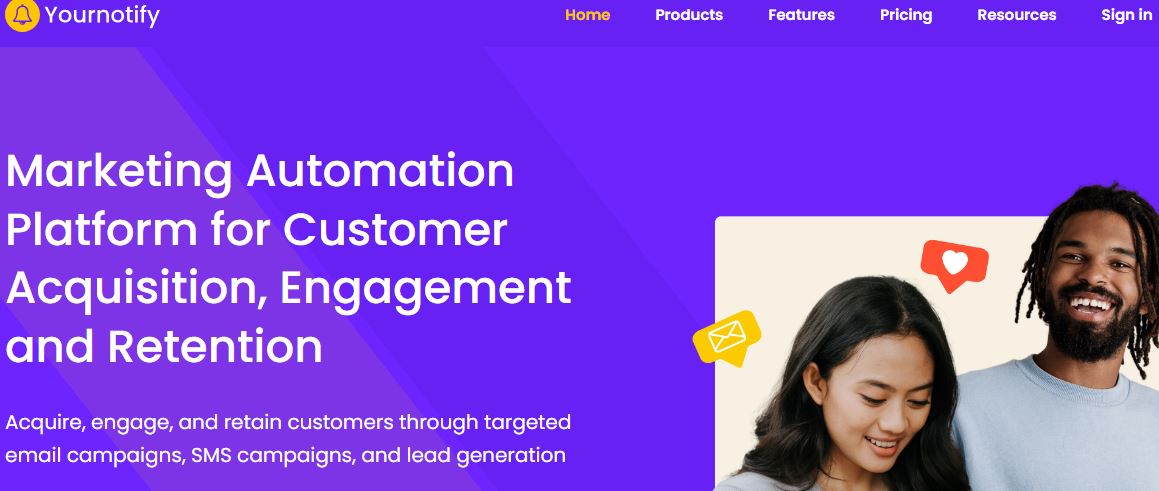
Startups like Vpay have successfully used Yournotify to streamline their SMS and email campaigns, enhancing engagement and driving growth. With pricing plans starting at ₦20,000, it’s a cost-effective solution for both small and large e-commerce brands aiming to improve their customer acquisition strategies.
2. Hubspot
HubSpot CRM helps you serve your customers better and stay organized as you grow. It helps you manage your sales pipeline, automate follow-ups, and keep track of every customer interaction, all in one place. HubSpot is trusted by global brands like Trello and Reddit, yet simple enough for small business owners.
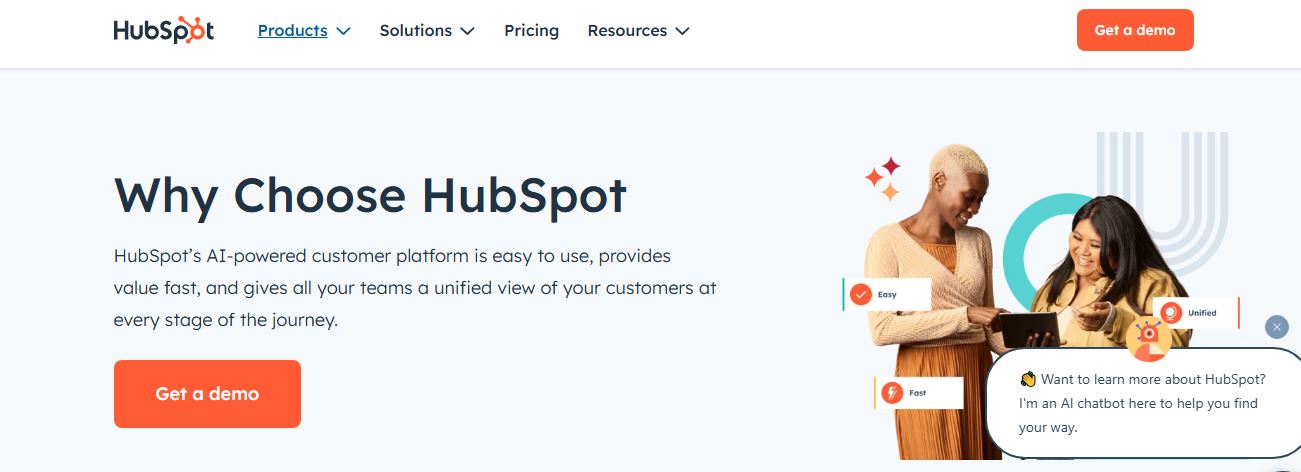
In South Africa alone, over 1,200 businesses use HubSpot, making it one of the most adopted CRMs in the region. It’s free tier gives you a lot to start with, and you can upgrade as you scale, so you’re only paying for what you really need.
3. Revwit
Revwit is a sales CRM built specifically for African businesses that want to close more deals without the hassle of complex software. It helps you capture leads automatically, sync contacts in real-time, and manage your pipeline with clarity. You can send personalised emails at scale and never miss a follow-up. As Emeka Mba-Kalu, CEO of Sendstack, puts it: “Revwit is the simplest sales software we’ve used. No consultants, no complex setup, just plug and sell!”
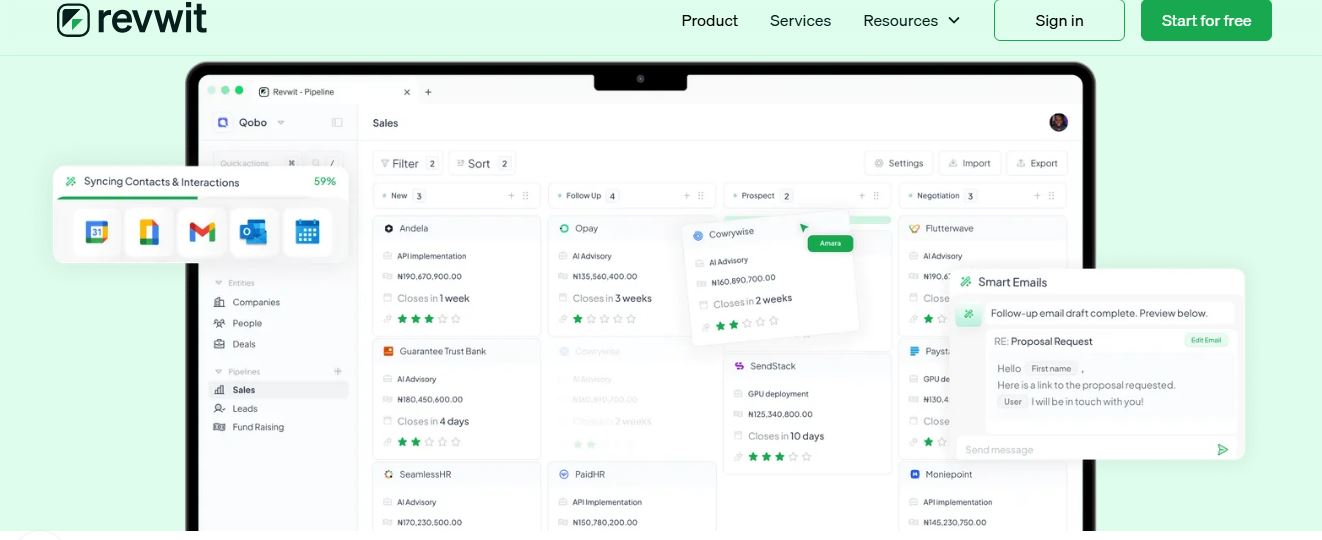
Over 200 African startups already use Revwit to streamline their B2B sales. It’s available in local currencies and has payment plans for each type of business. Whether you’re a startup or a growing team, Revwit helps you stay organised, automate outreach, and close deals faster.
4. Adroll
AdRoll is an ad retargeting tool that helps you attract the right customers by running personalized ad campaigns across social media, email, and the web. It’s beneficial for re-engaging visitors who didn’t take action on your website.
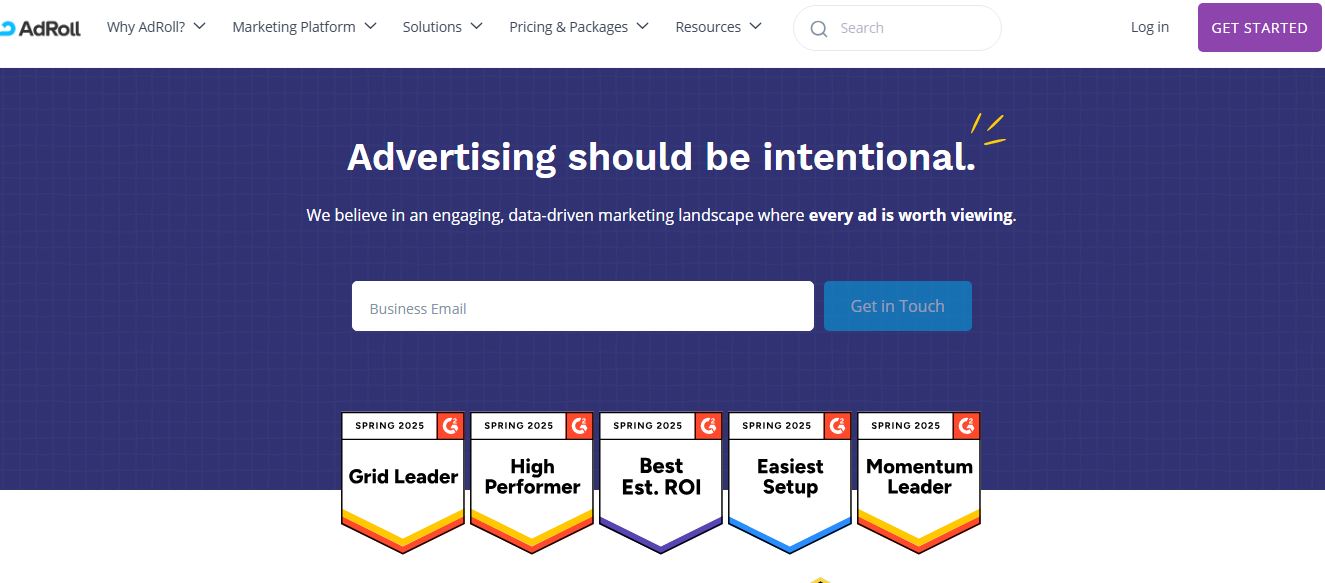
With dynamic ads driving 14% higher click-through rates, it’s a smart, automated way to follow up with potential customers. With plans starting at $36/month, it’s a great choice for scaling your reach and maximizing your ad spend for your e-commerce brand.
5. Bumpa
Bumpa helps you manage everything from customer engagement to sales records with just a few clicks. Whether you’re handling orders, tracking inventory, or keeping customer details organized, Bumpa makes it all easy and accessible, especially for e-commerce brands on the go.
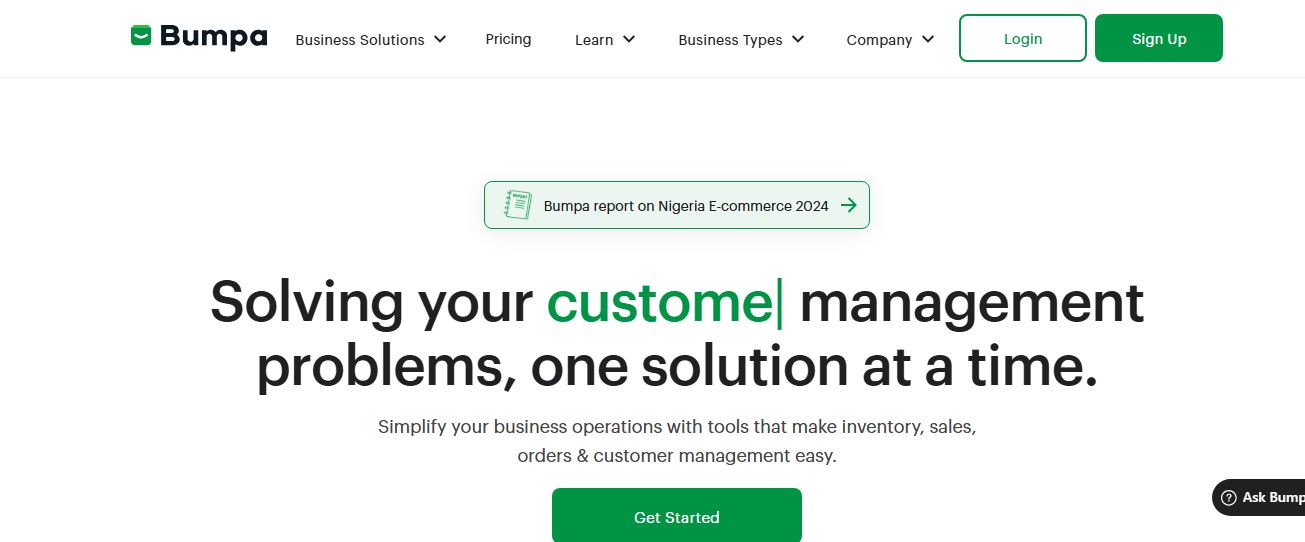
With Bumpa, you can run your business more efficiently, keep your customers happy, and focus on scaling without the stress of juggling multiple systems. With pricing starting from 15,000 naira quarterly, it’s an affordable, all-in-one solution to keep your operations on track.
Move Faster Than Your Competitors With MarTech
If you’ve made it this far, one thing should be clear: the old ways of acquiring customers aren’t enough anymore.
Today’s customers expect more, and the cost of reaching them keeps rising.
But there’s a smarter way forward.
Martech tools offer practical solutions to the biggest challenges: rising CAC, poor follow-up, and scattered data. You don’t need a large team or complex systems to see results. With the right tools, you can work faster, engage better, and grow sustainably.
Related Content
How Martech Companies are Enhancing Customer Experience
The post How Martech Is Driving E-commerce Growth In Africa: Top Tools & Strategies for Customer Acquisition In 2025 appeared first on MarTech Africa.
]]>The post How Martech Companies are Enhancing Customer Experience appeared first on MarTech Africa.
]]>Role of Martech in Enhancing Customer Experience
Customer experience is no longer just about delivering a good product; it’s about creating a meaningful and engaging journey for consumers. MarTech solutions help businesses empower companies to understand customer behavior, predict preferences, and optimize every touchpoint along the customer journey by:
- Leveraging data
- Automation
- AI-driven insights
Key Ways MarTech Companies Enhance Customer Experience
1. Personalization & AI-Driven Insights
The brands that are winning these days are brands that can anticipate their customers needs and provide relevant recommendations. MarTech companies use artificial intelligence (AI) and machine learning to analyze vast amounts of data and deliver personalized experiences.
Platforms like HubSpot and Marketo, enable businesses to create dynamic content, recommend products, and tailor messaging based on individual user behavior.
2. Omnichannel Customer Engagement
Modern customers interact with brands across multiple channels such as websites, mobile apps, social media, and email.
MarTech tools facilitate seamless omnichannel engagement by ensuring consistency in communication.
Customer Data Platforms (CDPs) segment and automation tools help businesses unify customer data, creating a more cohesive and frictionless experience.
3. Chatbots & Conversational AI
AI-powered chatbots and virtual assistants have transformed customer support and engagement.
Companies like Drift and Intercom provide conversational AI solutions that enable businesses to offer real-time assistance, automate responses, and improve customer interactions 24/7.
These tools enhance customer experience by reducing wait times and providing instant solutions to customer inquiries.
4. Data-Driven Decision Making
Data is the backbone of an excellent customer experience. MarTech tools like Google Analytics and CRM platforms (e.g., Salesforce, HubSpot CRM) help businesses collect and analyze customer data.
By understanding customer behavior, companies can make informed decisions, optimize marketing campaigns, and deliver targeted experiences.
5. Automation & Workflow Optimization
Marketing automation eliminates repetitive tasks, enabling brands to focus on creating meaningful customer interactions.
Email automation tools like Yournotify, Mailchimp and ActiveCampaign, along with social media schedulers like Hootsuite and Buffer, help streamline workflows.
Automated customer journeys ensure timely communication, improving engagement and retention rates.
6. Augmented Reality (AR) & Interactive Experiences
Innovative technologies like Augmented Reality (AR) are reshaping how customers interact with brands. Companies like Dulux leverage AR to enhance customer shopping experience. Their website allows users to visualize paint colors in their space. These immersive experiences increase engagement and drive higher conversion rates.
Challenges & Considerations
MarTech does a great job in helping marketers improve efficiency. However, it comes with challenges:
- Data Privacy & Compliance: With regulations like GDPR and CCPA, companies must ensure ethical data collection and usage.
- Integration Complexities: Businesses may struggle to integrate new MarTech solutions with existing systems.
- Maintaining a Human Touch: While automation enhances efficiency, companies must balance technology with personalized human interactions.
Related Content
Top Marketing Tools for Customer Engagement in 2025
The post How Martech Companies are Enhancing Customer Experience appeared first on MarTech Africa.
]]>The post Top Marketing Tools for Customer Engagement in 2025 appeared first on MarTech Africa.
]]>Email and SMS Marketing Automation Tools
Email marketing remains one of the most effective channels for customer engagement because it allows for direct, personalized communication with a large audience. With automation, businesses can send personalized and timely messages to their audience. Examples of some top tools include:
Yournotify – A powerful and user-friendly marketing tool for email campaigns, SMS campaigns, and content production to increase customer engagement and brand visibility.
HubSpot – A CRM and email marketing tool that allows businesses to automate workflows, segment audiences, and track customer interactions.
Get response – Helps businesses create and send emails, automate marketing, and host webinars.
Social Media Management Tools
Social media is a crucial platform for real-time engagement with your customers. These tools help brands schedule posts, analyze performance, and interact with audiences:
Hootsuite – A social media scheduling and monitoring tool that allows brands to engage with customers across multiple channels and monitor how well their content does through analytics.
Sprout Social – assists brands in interacting with consumers on various social media platforms, working together across teams, and assessing the success of their campaigns.
Buffer – Helps Simplify content scheduling and audience engagement while managing multiple accounts.
Customer Feedback & Experience Tools
Understanding customer sentiment and feedback is important for improving engagement strategies and driving long-term success. These tools help gather insights:
Google Forms – Allows businesses to design customized surveys with various question types, collect real-time responses, and analyze results efficiently
SurveyMonkey – It provides advanced analytics, and reporting tools to help businesses gain deeper insights into customer satisfaction and preferences.
Zoho Survey – Zoho Survey allows you to create and send surveys on mobile and web. It offers several ways to distribute your surveys.
Community & Loyalty Tools
Building an engaged community fosters brand advocacy and long-term relationships with your customers. These tools help in community-driven marketing:
Discord – A real-time communication platform for brand communities, allowing for voice, video, and text interactions in dedicated servers.
Circle.so – A community-building platform designed for businesses and content creators, offering private spaces for discussions and member engagement.
Mighty Networks – Helps brands create memberships, communities, and events with an integrated content and course platform.
Push Notification Tools
Push notifications help businesses boost engagement, retention, and conversions by delivering timely updates to users. Some tools that can help with this include:
Airship – Enables targeted, interactive mobile push notifications for better app engagement.
Twilio – Provides SMS, voice, video, and web push notifications through a single API.
Leanplum – Enhances mobile engagement with multi-channel messaging, including push, email, and SMS.
Businesses that prioritize customer engagement through effective marketing tools will gain a competitive edge and choosing the right tools based on business needs and customer preferences will ensure more personalized and meaningful interactions, ultimately driving brand loyalty and growth.
Related Content
8 Performance and Growth Marketing Tactics
The post Top Marketing Tools for Customer Engagement in 2025 appeared first on MarTech Africa.
]]>The post Customer Engagement via Email and SMS for Financial Services appeared first on MarTech Africa.
]]>Let’s explore the effectiveness of customer engagement via email and SMS for financial services, through some research and statistics to support our findings.
Effectiveness of Email for Customer Engagement:
Email is a popular communication channel for financial service providers as it provides a cost-effective way to reach out to customers.
According to a study conducted by Epsilon, email has an average open rate of 18.0% for financial services, which is higher than the overall average of 16.7%.
Additionally, the study found that the click-through rate for financial services emails is 3.3%, which is higher than the overall average of 2.6%. These statistics show that email is an effective channel for financial services to engage with customers.
The communication and customer engagement services of Nigerian financial institutions, including commercial banks, microfinance banks, and digital financial apps, have undergone a significant shift in recent years. These institutions have increasingly relied on email as a cost-effective means of communication and customer engagement.
Research and statistics indicate that commercial banks in Nigeria do not charge their customers for sending emails, while they charge for sending SMS because email is cost-effective. In a survey conducted by the Nigerian Communications Commission (NCC), it was found that SMS messages are more expensive than emails, with an average cost per SMS of N4.00 compared to an average cost per email of N0.10.
Digital financial apps like PiggyVest, Cowrywise and others have also used email to drive customer engagement, which has proven successful. According to a study by HubSpot, personalized emails have an open rate of 29.95%, compared to non-personalized emails, which have an open rate of 17.85%.
Personalization strategies that some of these apps have adopted, such as using imaginary characters like OPE from Cowrywise to converse with customers, have given them success in the past years of their operations.
The effectiveness of email as a customer engagement tool has brought success to these companies and kept them in business for the past years. As such, email has become an essential aspect of the communication and customer engagement strategies of Nigerian financial institutions
Effectiveness of SMS for Customer Engagement:
SMS is another popular channel for customer engagement, particularly for mobile-first customers.
According to a study conducted by EZ Texting, SMS has an open rate of 98%, compared to email’s open rate of 18%.
Additionally, the study found that SMS has a response rate of 45%, compared to email’s response rate of 6%. These statistics highlight the effectiveness of SMS as a channel for financial services to engage with customers.
In recent years, Nigerian banks have adopted SMS marketing as a strategy for improving customer experience and gaining more customers. This strategy has proven to be effective in reaching a wider audience and enhancing the overall customer experience.
A significant indication of the effectiveness of SMS marketing is the fact that a typical Nigerian customer would wait to receive an SMS credit alert to confirm the authenticity of a successful transaction. This implies that SMS marketing has become a reliable means of communication between banks and their customers in Nigeria.
Furthermore, banks in Nigeria also use SMS marketing to send birthday wishes to their customers everyday, making them feel special and fostering a strong emotional connection with them. This strategy contributes significantly to improving customer experience, which, in turn, has led to increased customer retention and loyalty.
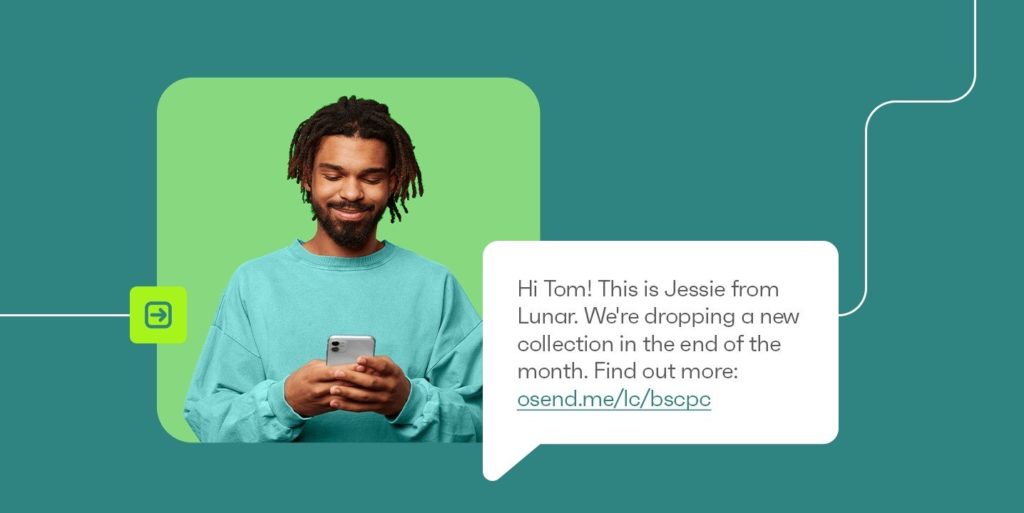
Moreover, the combination of SMS and Email marketing has been found to be particularly effective for customer engagement in the Nigerian banking industry.
A study conducted by Digital Doughnut showed that the combination of email and SMS can increase customer engagement rates by 75%. This is because customers who receive both email and SMS communications from a financial service provider are more likely to open, read, and respond to those communications.
In summary, the adoption of SMS marketing by Nigerian banks and other industries has proven to be an effective strategy for improving customer experience and gaining more customers. The combination of SMS and email marketing has also been found to be particularly effective for customer engagement, and this has contributed significantly to the overall success of banks and several businesses in Nigeria.
Conclusion
Customer engagement via email and SMS is a crucial component of a financial service provider’s marketing strategy.
Email is an effective channel for reaching out to customers, with high open and click-through rates. SMS, on the other hand, has a higher open and response rate than email.
Combining email and SMS can further increase customer engagement rates, leading to greater customer loyalty and ultimately driving revenue for financial service providers.
Related Content
Marketing Automation for Email and SMS in 2025
The post Customer Engagement via Email and SMS for Financial Services appeared first on MarTech Africa.
]]>