Product Marketing Articles | MarTech Africa https://martechafrica.com/blog/category/product-marketing/ Revolutionizing the future of marketing technology in Africa: Insights, Strategies and Innovation Thu, 13 Nov 2025 14:18:41 +0000 en-US hourly 1 https://wordpress.org/?v=7.1.2 https://martechafrica.com/wp-content/uploads/2023/07/cropped-yournotify_martech_africa-32x32.png Product Marketing Articles | MarTech Africa https://martechafrica.com/blog/category/product-marketing/ 32 32 Step‑by‑Step Guide to Using Sentiment Analysis for Brand Growth in Africa https://martechafrica.com/blog/step-by-step-guide-to-using-sentiment-analysis-for-brand-growth-in-africa/?utm_source=rss&utm_medium=rss&utm_campaign=step-by-step-guide-to-using-sentiment-analysis-for-brand-growth-in-africa Thu, 13 Nov 2025 14:18:41 +0000 https://martechafrica.com/?p=1785 If you’re building or marketing a brand in Africa today, social media has become the continent’s largest and most honest […]

The post Step‑by‑Step Guide to Using Sentiment Analysis for Brand Growth in Africa appeared first on MarTech Africa.

]]>
If you’re building or marketing a brand in Africa today, social media has become the continent’s largest and most honest focus group. Conversations on whatsApp groups, TikTok trends are part of the millions of daily conversations that reveal exactly what people love, dislike, or hope to see from the brands they encounter.

However, most of these feedback is casual, spontaneous “chatter”, not neatly captured in customer feedback forms. Yet it carries enormous value for brands that know how to interpret it. Despite the growing optimism across Africa, for example, 77% of African youth expect their standard of living to improve over the next two years. Only 11 of Africa’s Top 100 most admired brands are home‑grown, the lowest level since 2011. This gap highlights a critical opportunity: belief in Africa must translate into loyalty to African brands.

This is where sentiment analysis is necessary for brand to help them decode the emotional pulse of everyday conversations, brands can earn genuine preference, loyalty, and ultimately purchase.

What Is Sentiment Analysis?

Sentiment analysis is exactly what it sounds like: measuring how people feel about a brand, product, or campaign, whether positive, negative, or neutral based on what they say online. It goes beyond counting likes or shares. Instead, it interprets the mood behind words, emojis, images, and even videos.

Modern sentiment analysis relies on AI and algorithms to scan massive volumes of content across social media, blogs, and reviews, tagging expressions of emotion like “happy,” “frustrated,” or “meh.” This real‑time feedback provides actionable insights, allowing brands to respond quickly.

The difference today is scale and speed. Real‑time tools can analyse millions of posts in seconds, helping brands spot a brewing crisis, a viral compliment, or a shift in consumer sentiment before it escalates. In fact, a recent statistic shows that 91% of companies with high ROI track sentiment in real time.  Studies show that real‑time sentiment tracking can increase sales by up to 20% and improve lead quality by up to 25%. 

The Challenges of Sentiment Analysis in Africa

Language & Culture

Africa has over 2,000 languages and dialects, fast‑changing slang, and coded cultural cues. A joking post in Nigerian Pidgin or a meme in Swahili can totally confuse global sentiment tools and result in missed or mis‑interpreted signals. That’s why leading‑edge platforms are starting to adapt, integrating local African languages and even emoji/meme analysis to reflect how Africans actually express themselves online.

Platform Diversity & Data Streams

Digital conversations in Africa span many channels. Brands cannot rely on a single platform like Facebook or X alone. They need tools and processes that are flexible, robust and culturally aware.

Smaller Budgets, Bigger Expectations

Many African brands operate with lean marketing teams and modest budgets. The idea of installing enterprise sentiment‑analysis infrastructure can feel overwhelming. Yet the upside is high: with authenticity and real‑time responsiveness, local brands can catch up fast.

Turning Social Chatter into Product Insights

So how do brands turn streams of online chatter into strategic product or brand decisions? It comes down to recognising patterns, extracting meaning, and acting fast. Here’s a clear, accessible framework used by successful brands:

  1. Listen Broadly
    Gather data from diverse digital sources; don’t limit yourself to one platform. Consider WhatsApp groups, Instagram Stories, TikTok trends, local forums and review sites.

  2. Filter Signals from Noise
    Use sentiment tools to identify not just major spikes in praise or complaint, but recurring themes, subtle suggestions, and hidden pain‑points.

  3. Map Sentiment to Action
    Connect shifts in online mood to business actions, launching a new feature, tweaking messaging, or quickly resolving common frustrations.

  4. Act and Adapt
    Test product ideas or campaign changes sparked by consumer feedback; measure if sentiment improves after you act. Use sentiment‑shift as a KPI for your next cycle.

Tools and Techniques: Accessible Tech for African Brands

You don’t need a massive team or budget to get started with sentiment analysis today. Consider these accessible tools and action steps, ideal for lean African marketing teams:

  • All‑in‑One Marketing Platforms: Solutions that can ingest feedback from email, SMS, social posts and lead‑gen sources, giving a fuller picture of sentiment across touchpoints while simplifying customer engagement.

  • Local Language Analytics: Platforms tailored to African languages and multilingual NLP solutions increase accuracy when decoding social sentiment.

  • Step‑By‑Step Setup:

    • Use social listening tools to track both tagged and untagged mentions (even basic Google Alerts work).

    • Plug feedback into your marketing‑automation tool so that customer sentiment triggers real‑time responses or campaigns.

    • Implement automated campaigns responding to negative sentiment (e.g., immediate “How can we help?” messages via SMS or email for dissatisfied customers).

    • Measure and iterate: Regularly check sentiment shifts after your campaigns or interventions, refining your approach based on real results.

Transforming Customer Sentiment into Product Wins

When brands harness sentiment analysis well, it’s because they act decisively on what they hear. Here’s how notable African brands are closing the loop between insight and action:

  • Product Improvements: A leading African smartphone brand used sentiment from social media and reviews to refine battery and camera features in newer models, directly responding to persistent user feedback across markets like Nigeria and Kenya.

  • Campaign Pivots: A major beverage brand in Nigeria monitors hashtag campaigns and social chatter in real time, enabling the marketing team to swiftly adjust messaging or promotional offers if sentiment takes a negative turn during product launches or festivals.

  • Customer Segmentation: A pan‑African telecom leader segments customers by emotional response and satisfaction metrics gathered via sentiment analysis. This enables hyper‑targeted campaigns and support strategies, improving engagement and loyalty in competitive markets.

The Future of Sentiment Analysis in Africa

Africa’s landscape is unique, complex and full of potential for innovative sentiment analysis:

  • Local Language AI: Projects like Masakhane and platforms such as Izwe AI are making it possible to analyze languages like Igbo, Yoruba, Swahili and more, bridging the gap for millions of consumers whose voices were previously under‑heard.

  • Mobile‑First Analytics: As mobile remains the main internet access point, brands are exploring sentiment monitoring directly through SMS and WhatsApp feedback streams.

  • Ethical Data Handling: With AI scaling, there’s growing awareness around privacy, transparency and the need for consent as sentiment‑data is collected and interpreted.

  • Connected Platforms: Marketing‑automation tools will increasingly integrate real‑time sentiment triggers, so product feedback leads straight to action, whether that means launching a new campaign, fixing a pain‑point or sending a well‑timed reassurance message.

For Africa’s tech‑forward marketers, the future means smarter, more localized and ultimately more connected conversations with customers. Mobile‑first strategies, AI‑driven insights and real‑time automation are making it possible for brands to meet people where they are, on their terms, in their language, and at the very moment it matters. Those who adapt and listen closely will not only drive results but help build a marketing landscape that’s both innovative and genuinely connected across every corner of the continent.

Related Content

How to Build a Content Engine In 2026 When You Don’t Have a Big Team

The post Step‑by‑Step Guide to Using Sentiment Analysis for Brand Growth in Africa appeared first on MarTech Africa.

]]>
Gamification Tactics Every Marketer Should Know to Win More Engagement https://martechafrica.com/blog/gamification-tactics-every-marketer-should-know-to-win-more-engagement/?utm_source=rss&utm_medium=rss&utm_campaign=gamification-tactics-every-marketer-should-know-to-win-more-engagement Thu, 11 Sep 2025 13:05:11 +0000 https://martechafrica.com/?p=1667 In today’s cluttered digital environment, consumer attention has become a scarce commodity and brand loyalty is more fragile than ever. […]

The post Gamification Tactics Every Marketer Should Know to Win More Engagement appeared first on MarTech Africa.

]]>

In today’s cluttered digital environment, consumer attention has become a scarce commodity and brand loyalty is more fragile than ever. Research suggests that the typical person is exposed to 4,000 to 10,000 brand messages per day, depending on how you define “message” (ads, promotions, social content etc.). Microsoft has also claimed that the “average human attention span” has dropped to around 8 seconds, which makes capturing interest almost instantaneously critical.

Loyalty, too, has lost much of its permanence. In the consumer goods industry, 74% of customers say they’d switch to a competitor after just one poor online experience. Also, 62% of consumers would stop buying from a brand after a data breach or privacy violation. These figures show that consumers both expect more and are quicker to pull away when expectations aren’t met.

With this constant change in the digital environment, brands are turning to gamification, weaving game-like mechanics into everyday marketing to make experiences more engaging, interactive, and emotionally resonant.

Why Gamification Works

Gamification takes basic human drives like the need to achieve, collect, compete, and be recognized and infuse it into marketing. When a brand frames an action as progress, earning points, unlocking a level, topping a leaderboard, users stay motivated.

Research shows gamification can meaningfully lift results. Gartner has noted that well-designed programs improve engagement and loyalty across industries. It isn’t about turning everything into a video game; it’s about turning routine actions into rewarding milestones.

Seven Practical Gamification Tactics

Points, Badges and Leaderboards

The PBL model, points for activity, badges for milestones, leaderboards for ranking remains the most common entry point. Coffee shops, airlines, and learning platforms have used it for years because progress tracking is addictive.

Branded Challenges & Competitions

Challenges turn customers into participants. A skincare brand could launch a 7-Day Glow Challenge encouraging daily posts, with digital stickers and shout-outs for completers. The campaign drives user-generated content and keeps the brand present on feeds for a week straight.

Interactive Quizzes & Treasure Hunts

Quizzes satisfy curiosity while guiding purchase decisions. A fashion retailer can create a “Find Your Style” quiz, ending with personalised recommendations and a small coupon.

Treasure hunts or hidden vouchers encourage deeper browsing. Jumia Black Friday campaigns have used online hunts to push shoppers across dozens of product pages, boosting both engagement and conversions.

Spin-to-Win Wheels & Instant Rewards

Randomized prizes generate urgency. A spin wheel on a website promises discounts, free shipping, or samples in exchange for an email sign-up. The unpredictability keeps people trying, while you gain permission to remarket. Tools like Woorise or Privy make the mechanic easy to deploy.

Progress Bars, Streaks & Habit Loops

Habit-forming design can be subtle yet powerful. Seeing “Day 5 of your saving streak” or “You’re 80% to Gold Level” motivates people to complete the journey. Language app Duolingo thrives on streaks, gems, and levels, making daily study feel like a personal win.

Financial apps increasingly use the same logic progress indicators for budgeting, badges for consistent deposits, and gentle nudges when a streak is about to break.

Augmented Reality & Real-World Play

AR turns passive viewing into participation. Pepsi Max famously placed AR tigers, UFOs, and robots at London bus stops, sparking viral reactions and free media 

Loyalty Quests & Tiered Rewards

Tiered loyalty schemes motivate continuous engagement by framing rewards as an ongoing journey. Even modest businesses can mimic this by introducing “Bronze, Silver, Gold” milestones with perks like free delivery or priority access.

Tips for Rolling Out Gamification Tactics

1. Define the Business Goal First

Before introducing gamification, be clear about what you want to achieve. The tactics that work for boosting email sign-ups may not be the same as those for driving repeat purchases or referrals. For example:

  • If the goal is sign-ups, use simple entry challenges like spin-the-wheel or scratch cards.
  • For repeat purchases, loyalty points and tiered rewards work best.
  • To boost referrals, think leaderboard challenges or rewards for inviting friends.
  • For brand awareness, quizzes, polls, and shareable challenges make users spread the word.

2. Align Fun with Brand Identity

Gamification should feel natural to your brand voice and industry. If you’re a bank or fintech, customers expect trust, stability, and professionalism so avoid overly slapstick or trivial games that may cheapen credibility. Instead, use goal trackers, achievement milestones, or savings challenges.

On the other hand, a lifestyle, fashion, or entertainment brand can lean into humour, creativity, and playful mechanics like AR filters, trivia, or meme-based challenges. The key is to make sure the game reinforces your brand story rather than distracts from it.

3. Keep Rewards Meaningful

Badges and points can spark initial interest, but people need rewards that carry real value to stay engaged. These rewards don’t have to be expensive; what matters is that they feel worthwhile. A discount or voucher, for example, can directly motivate a purchase, while early access to new collections or limited products appeals to customers’ desire for exclusivity.

Recognition within a community such as featuring top players on social media or giving them a special title can create a sense of pride and belonging.

Even something as simple as personalizing a reward based on past purchases shows customers that their engagement is noticed and valued. When rewards are meaningful, they spark anticipation, encourage repeat interaction, and build lasting loyalty.

4. Optimize for Mobile

Over 70% of online interactions now happen on mobile devices. If your gamified experience loads slowly, has tiny buttons, or requires too many steps, users will abandon it.
Some of the best practices:

  • Keep interactions short and snackable (think quizzes or spins).
  • Ensure visuals are responsive and touch-friendly.
  • Avoid heavy graphics that slow down the experience.
  • Use push notifications or in-app reminders to keep users coming back.

A smooth, mobile-first design ensures higher participation rates and better conversion.

5. Measure, Refine, Repeat

Gamification is not “set and forget.” You need to track what’s working and optimize regularly. Key metrics include:

  • Participation rates – How many people are engaging?
  • Time spent – Are users actually enjoying the experience?
  • Conversion metrics – Are game players moving closer to your business goals (sign-ups, sales, referrals)?
  • Retention/return visits – Are they coming back for more?

By analyzing this data, you can tweak mechanics, introduce fresh challenges, or retire features that don’t deliver ROI.

Gamification is about tapping into human motivation and turning routine interactions into rewarding experiences. When done right, it transforms passive audiences into active participants who feel invested in the journey. Gamification creates a sense of achievement that keeps people coming back. In an era where attention is scarce, the brands that master this approach won’t just capture clicks, they’ll earn trust, loyalty, and long-term engagement.

Related Content

Customer Retention Strategies That Work in African Markets (2025 Guide)

The post Gamification Tactics Every Marketer Should Know to Win More Engagement appeared first on MarTech Africa.

]]>
How to Apply the Marketing Mix to SaaS and Digital Products for Business Growth https://martechafrica.com/blog/how-to-apply-the-marketing-mix-to-saas-and-digital-products-for-business-growth/?utm_source=rss&utm_medium=rss&utm_campaign=how-to-apply-the-marketing-mix-to-saas-and-digital-products-for-business-growth Wed, 09 Jul 2025 15:58:57 +0000 https://martechafrica.com/?p=1580 In today’s fast-evolving digital economy, the success of a SaaS (Software-as-a-Service) or digital product business demands more than technical excellence […]

The post How to Apply the Marketing Mix to SaaS and Digital Products for Business Growth appeared first on MarTech Africa.

]]>
In today’s fast-evolving digital economy, the success of a SaaS (Software-as-a-Service) or digital product business demands more than technical excellence it requires strategic marketing.

What are the 4Ps of the marketing mix?

The 4 Ps of marketing is a foundational marketing strategy framework developed by Jerome McCarthy in his 1975 book Basic Marketing: A Managerial Approach.

Despite facing criticism over the years, a European Journal of Business and Management Research study argues that the 4Ps remain a robust model for modern marketing strategies.

The research highlights the framework’s adaptability and effectiveness across various market contexts, suggesting that McCarthy’s original model still serves as a foundational tool for marketers.

Each “P” represents a critical decision area for marketers, helping craft effective strategies to attract and retain customers.

  • Product refers to what you’re selling and how it meets customer needs.
  • Price is what you charge, balancing profitability with customer value.
  • Place involves how you distribute the product, making it accessible to the target audience.
  • Promotion covers how you communicate the product’s value to drive sales.

The Importance of the Marketing Mix

  • It provides a clear structure for developing and executing marketing strategies.
  • It ensures alignment between the product and customer needs, increasing chances of market success.
  • It guides pricing, promotion, and placement decisions, helping brands stay competitive.
  • It promotes consistency across marketing channels, strengthening brand identity.
  • It helps businesses adapt quickly to market trends and consumer behavior shifts.

Here’s how each element of the marketing mix applies in the world of SaaS and digital products:

Product

In SaaS, the product isn’t just software,it’s the entire user experience, from design and onboarding to customer support. According to Paddle’s 2023 report, 61% of churn is linked to product dissatisfaction, underscoring the importance of continual zero-in on UX and user feedback sources . Evolving the product based on data and customer insight is essential for improving retention and referrals.

Price

SaaS pricing often involves subscriptions, tiers, usage-based models, or freemium options. It’s vital that pricing reflects real value and aligns with what users are willing to pay. ProfitWell reports that companies that test and optimize pricing quarterly grow 2–4× faster than those that don’t. Smart pricing isn’t static it’s a continuous strategy for customer acquisition and upselling.

Place

For SaaS, “place” means digital distribution channels, websites, app stores, integrations, and software comparison sites. Gartner data reveals that 83% of B2B buyers prefer self-serve purchasing online, emphasizing the need for discoverable, convenient, self-service access Smooth, optimized digital journeys free of friction are key to conversion and retention.

Promotion

Effective promotion for SaaS focuses on educating rather than selling. Content marketing, SEO, webinars, email nurturing, and remarketing are staples. Research by DemandMetric shows that companies with active blogs generate 67% more leads. High-value, SEO-driven content to target bottom-of-funnel audience segments is critical for conversions.

The 4Ps Marketing Mix framework is a powerful, time-tested formula for SaaS and digital product success. While the model remains rooted in classic strategy, its interpretation in the digital era requires precision and data-driven execution. By optimizing each “P” with user insights and metrics-based decisions, you can stand out in a crowded, competitive SaaS market.

Related Content

8 Performance and Growth Marketing Tactics

The post How to Apply the Marketing Mix to SaaS and Digital Products for Business Growth appeared first on MarTech Africa.

]]>
Must-Have Tools Every Product Marketer Should Use in 2025 https://martechafrica.com/blog/must-have-tools-every-product-marketer-should-use/?utm_source=rss&utm_medium=rss&utm_campaign=must-have-tools-every-product-marketer-should-use Thu, 03 Jul 2025 15:44:07 +0000 https://martechafrica.com/?p=1576 In 2025, product marketing is no longer just about crafting compelling messaging or coordinating product launches. It’s about owning the […]

The post Must-Have Tools Every Product Marketer Should Use in 2025 appeared first on MarTech Africa.

]]>

In 2025, product marketing is no longer just about crafting compelling messaging or coordinating product launches. It’s about owning the entire go-to-market motion backed by data, automation, and cross-functional alignment. With the right tools, product marketers can streamline workflows, validate positioning, drive product adoption, and prove their value across the org.

Here are Must-Have Tools Every Product Marketer Should Use

1. Product Board 

One of the most important aspects of product marketing is aligning product development with real customer needs and that’s where a tool like Product board becomes invaluable. It serves as a centralized hub for capturing customer feedback, organizing feature requests, and translating insights into priorities.

Product marketers can use it to build strategic launch plans in collaboration with product teams, ensuring that everyone on a team is aligned on what’s coming next and why it matters. It’s visual roadmaps and prioritization frameworks not only helps teams stay focused on high-impact features but also makes it easier to communicate the product vision to stakeholders across the company.

2. Notion – For Content, Enablement & Collaboration

Effective product marketing depends heavily on clear communication and alignment across multiple teams and Notion excels at making that happen. As a flexible, all-in-one workspace, it allows product marketers to organize everything from positioning documents to go-to-market playbooks in one easily accessible location.

If you’re drafting messaging frameworks, preparing launch briefs, or compiling competitive intelligence, Notion provides the structure and transparency needed to keep cross-functional teams on the same page. By centralizing essential resources, it helps ensure that marketing, product, sales, and customer success teams are always aligned and working from the same source of truth.

3. Gong – For Voice of the Customer & Sales Feedback

Understanding how your messaging performs in real-world conversations is critical and Gong makes this possible at scale. It records and analyzes sales calls, provides product marketers with firsthand insights into what resonates with prospects, what confuses them, and which objections surface most frequently.

This intelligence is invaluable for refining messaging, identifying friction points in the buyer journey, and validating whether your product positioning aligns with customer needs. Beyond just data, Gong captures the actual language customers use helping you shape more authentic, effective communication that mirrors how your audience thinks and talks.

4. Canva or Figma 

Tools like Canva and Figma help product marketers to bring ideas to life through eye-catching, on-brand visuals. Canva is perfect for quick, polished designs without needing a graphic design background, while Figma offers robust design collaboration for working closely with creative teams.

If you’re developing sales decks, social graphics, datasheets, or product walkthrough prototypes, these tools help ensure your visuals are both impactful and aligned with your messaging. They also make it easy to iterate and collaborate on launch materials speeding up execution without sacrificing quality.

5. Typeform or Maze 

Strong product marketing starts with understanding your audience and that means doing the research. Tools like Typeform and Maze make it easy to collect both qualitative and quantitative insights directly from users. When running pre-launch surveys, testing messaging variations, or gathering feedback on new features, these platforms help you validate your ideas before they go to market.

They simplify the process of reaching the right people, asking the right questions, and analyzing the responses in a way that informs smarter decisions around positioning, pricing, and product development. In a world where assumptions can be costly, these tools bring clarity.

6. Yournotify 

Yournotify helps you acquire, engage, and retain customers through targeted email campaigns, SMS messages, lead generation tools, and reward incentives, all in one platform. Designed for product marketers, it makes reaching the right users with the right message simple by unifying email, SMS, and in-app communications.

With powerful segmentation and built-in analytics, you can easily announce product updates, launch new features, and track engagement, ensuring every message is timely, targeted, and impactful.

7. Amplitude or Mixpanel 

A core part of product marketing is understanding what users do once they’re inside your product and tools like Amplitude and Mixpanel make that possible. These platforms offer deep behavioral insights that help you track how users engage with features, where they drop off, and how they move through the product journey.

For product marketers, this data is essential for refining onboarding experiences, improving adoption strategies, and measuring the effectiveness of in-product campaigns. By tying user behavior to marketing efforts, you can make smarter, more targeted decisions that drive long-term growth.

Great product marketing can be done seamlessly right tools. As the role becomes more strategic in 2025, building a tech stack that covers planning, execution, insights, and iteration is non-negotiable.

Related Content

Top Social Media Listening Tools to Enhance Your Marketing Strategy in 2025

The post Must-Have Tools Every Product Marketer Should Use in 2025 appeared first on MarTech Africa.

]]>

3 Core Elements Your Product Launch Strategy Needs in 2025 https://martechafrica.com/blog/core-elements-your-product-launch-strategy-needs/?utm_source=rss&utm_medium=rss&utm_campaign=core-elements-your-product-launch-strategy-needs Fri, 30 May 2025 11:30:43 +0000 https://martechafrica.com/?p=1448 Launching a product in today’s noisy and competitive market especially in Nigeria’s fast-evolving digital economy takes more than a good […]

The post 3 Core Elements Your Product Launch Strategy Needs in 2025 appeared first on MarTech Africa.

]]>

Launching a product in today’s noisy and competitive market especially in Nigeria’s fast-evolving digital economy takes more than a good idea and a few social media posts. If  you’re a startup introducing your first product or an established brand releasing a new feature, your product launch strategy can make or break your success.

So what separates a launch that gains traction from one that becomes irrelevant?

Here are three core elements every successful product launch strategy needs, especially if you’re launching in a high-stakes, high-potential market like Nigeria.

1. Clarity

The first and most overlooked element of any strong product launch is clarity. This means being absolutely clear on:

  • Who you’re launching to 
  • What problem you’re solving 
  • Why your solution is better or different from that of your competitors 

In Nigeria, where consumers are value-driven and skeptical of hype, you need to speak directly to pain points. If you’re launching a fintech app, say how it reduces transfer delays. If you’re releasing a skincare brand, explain how it addresses hyperpigmentation or affordability. 

Statistics have shown that 65% of Men are early adopters of new products, while 59% of late adopters are women. Build customer personas, run quick surveys, or even test messaging in WhatsApp groups or market stalls. 

2. Coordination

A successful product launch is not planned in one day, it’s a well-orchestrated campaign that unfolds across multiple touchpoints and timeframes. Every element, from your messaging to your execution, must be coordinated to build anticipation, deliver impact, and sustain momentum.

Some of these important touch point includes:

Marketing Channels

Utilize a mix of digital and offline marketing channels to ensure widespread visibility and engagement. Your campaign should integrate:

  • Social Media: Run countdowns, teaser videos, behind-the-scenes content, live Q&As, and influencer collaborations across platforms like Instagram, Twitter/X, LinkedIn, and TikTok.
  • Email Marketing: Create segmented email flows for different audience groups—existing customers, early adopters, media contacts—with exclusive previews, launch announcements, and post-launch updates.
  • Influencer Partnerships: Collaborate with relevant creators (tech experts, lifestyle influencers, micro-influencers) to build credibility and excitement.
  • Public Relations (PR): Secure media coverage in trusted publications and blogs. Prepare press kits, pitches, and launch-day interviews.
  • Offline Activations: Depending on your target audience, consider in-person experiences like product demos, pop-up events, or branded giveaways.
Internal Team Alignment

Your internal teams must be in sync to support every phase of the launch:

  • Sales: Equip your sales team with pitch decks, FAQ sheets, and limited-time offers to close early deals.
  • Customer Support: Prepare your support team for increased inquiries. Offer training on new features, setup instructions, and potential troubleshooting.
  • Product Team: Be ready to monitor performance, collect feedback, and roll out quick fixes or improvements.
  • Marketing & Comms: Ensure consistent messaging across all materials and platforms.
  • Operations & Logistics: Confirm that stock levels, delivery timelines, and backend systems are fully ready to handle demand.
Timeline Planning

Your launch campaign should be mapped out in three key phases:

Pre-Launch (Building Anticipation):

  • Announce the product name or concept.
  • Tease features through mystery posts or early access invites.
  • Start influencer and PR seeding.
  • Open waitlists or early bird sign-ups.

Launch Day (The Main Event):

  • Host a virtual or physical launch event.
  • Push major announcements across all platforms.
  • Encourage live engagement using hashtags or real-time giveaways.
  • Deploy press releases and influencer reviews.

Post-Launch (Sustaining Momentum):

  • Share testimonials, case studies, and social proof.
  • Roll out targeted ads based on early user behavior.
  • Highlight user-generated content and continued influencer support.
  • Offer limited-time promos to capture undecided leads.

Without coordination, you risk confusing your audience or missing the moment. The best launches feel planned out, not scattered.

3. Consistency

One of the biggest mistakes brands make is going all in for launch day, and then disappearing.

Your Product launch strategy should include a post-launch plan that maintains visibility, supports new users, and builds trust. This might involve:

  • Weekly follow-up content (how-tos, user stories, behind-the-scenes) 
  • Active customer support (especially on Twitter and WhatsApp) 
  • User feedback loops to improve and iterate quickly 
  • Retargeting ads and email campaigns to stay top of mind 

In Nigeria, where trust is earned over time, consistency is the key to adoption. People want to see that you’re not just chasing clout, you’re here to stay.

A successful product launch isn’t about going viral for a day. It’s about building momentum, meeting real needs, and staying top of mind. In Nigeria’s vibrant but challenging market, flashy campaigns alone won’t cut it—you need depth, discipline, and follow-through.

Related Content

Product Launch Marketing Ideas

The post 3 Core Elements Your Product Launch Strategy Needs in 2025 appeared first on MarTech Africa.

]]>
Market Research for Product Validation https://martechafrica.com/blog/market-research-for-product-validation/?utm_source=rss&utm_medium=rss&utm_campaign=market-research-for-product-validation Tue, 11 Feb 2025 14:01:43 +0000 https://martechafrica.com/?p=835 Product validation is the consideration of the amount of demand that exists for our product/service in a specific market. It’s […]

The post Market Research for Product Validation appeared first on MarTech Africa.

]]>
Product validation is the consideration of the amount of demand that exists for our product/service in a specific market. It’s relevant to validate our products at the early stages of the entrepreneurial process to make sure that we don’t waste time and resources developing a product that isn’t a good fit for the market.

Securing market validation can also instill confidence among investors, crowd funders, and banks that are considering funding our startups. One of the best ways to penetrate the market is to create a unique offering away from what the competition is doing in order to increase demand.

By going through the process of validating one’s business idea, one can gain a deeper comprehension of how one’s product meets or doesn’t meet their target customers’ pain points. These insights we gain can help us create an offering that not only addresses our market segment’s needs but earns us our first paying customers.

How to Carry out Market Research?

Market research for product validation

These are five steps we have applied to help guide our research process and they have been tested and approved by the Harvard Business school.

Lead with Goals, Hypothesis and Assumptions:

Goals can serve as vision boards leading us in a clear business direction. Without a stated plan or direction we might never uncover some assumptions and this could cost us a fortune in the future.

Remember to ask these simple questions;

  • What value offerings does my business provide?
  • Who is my precise audience and what don’t I know about them?
  • What is the uniqueness of my product in the market?
  • What plans do I have for my product pricing and business model?

When we answer the questions above we would discover the value of our business idea and we appear differently from the existing competition. This exercise would also bring our attention to our assumptions and the hypothesis we’ve created in the past.

Observe Search Rates:

Market experts have advised us to examine the audience’s search for words relating to our product critically. Remember, they might not be searching for the exact product but words that might lead them to it. We must consider how often these searches are being made with tools like google trends.

Also, using google’s keyword planner tool is a great way to see how many people are searching keywords that relate to our product or service. Thirdly, create room for feedback like surveys and questionnaires to understand the stage of the consumer and how we can offer more value.

Conduct Analysis of The Competition:

One way we can make sure there is a healthy market to sell to is to look closely at our direct competition. Find out what they are doing and how it compares to what you are planning to do. If there are competitors out there, it only proves that there’s existing demand for the product.

Businesses that don’t make money don’t stay in business, so learning about how long our competitors have managed to stay in business and roughly what their trajectory has been so far can provide some insight into the failure or triumph of our business idea.

Study Sales, Data, Numbers and Size:

Before proceeding with our venture, we must estimate the size of our target market and if we could potentially capture a share of it. By doing so, we can gauge our business potential and justify its launch. For products similar to ours, we must research sales data, the number and share of current manufacturers, and what percentage of the total market our segment holds. Determine where our product fits into the market and assess how much of it our business could own.

Do A Product Test Run: 

Immediately we decided that there is a place for our product in the market, we can then proceed to do a test run of the product to observe how the consumers respond and if they are willing to pay that particular price for the value we are offering.

These are steps that we have implemented thus far and they have guided our business structure and helped us achieve our goals.

Related Content

8 Performance and Growth Marketing Tactics

The post Market Research for Product Validation appeared first on MarTech Africa.

]]>
How Canva, Netflix, Amazon Prime Tapped Into The Nigeria Market – African Expansion https://martechafrica.com/blog/canva-netflix-amazon-prime-tapped-into-nigeria-market/?utm_source=rss&utm_medium=rss&utm_campaign=canva-netflix-amazon-prime-tapped-into-nigeria-market Tue, 11 Feb 2025 11:05:18 +0000 https://martechafrica.com/?p=981 The African continent has become an increasingly attractive market for many global companies. Companies such as Canva, Netflix, and Amazon […]

The post How Canva, Netflix, Amazon Prime Tapped Into The Nigeria Market – African Expansion appeared first on MarTech Africa.

]]>
The African continent has become an increasingly attractive market for many global companies. Companies such as Canva, Netflix, and Amazon Prime have successfully tapped into this market and have achieved remarkable success.

This article will explore how these companies have managed to expand into the Nigerian market and the strategies they have employed to do so. 

CANVA

Canva, an Australian based graphic design platform, has made strides in the Nigerian market by providing users with a suite of user-friendly tools and templates for creating stunning visuals. 

Canva’s partnership with the Nigerian Communications Commission (NCC) has allowed them to offer tailored services that are tailored to the needs of the Nigerian market. This has helped them to gain a foothold in the market and build a strong user base. 

NETFLIX

Netflix, the world’s leading streaming service, has also found success in the Nigerian market. The company has made efforts to ensure their services are available in the country, by partnering with local content providers such as Iroko, Iroko+, and iROKOtv. 

Netflix also offers a wide range of Nigerian-produced films and series, as well as content tailored to the Nigerian market.

AMAZON PRIME

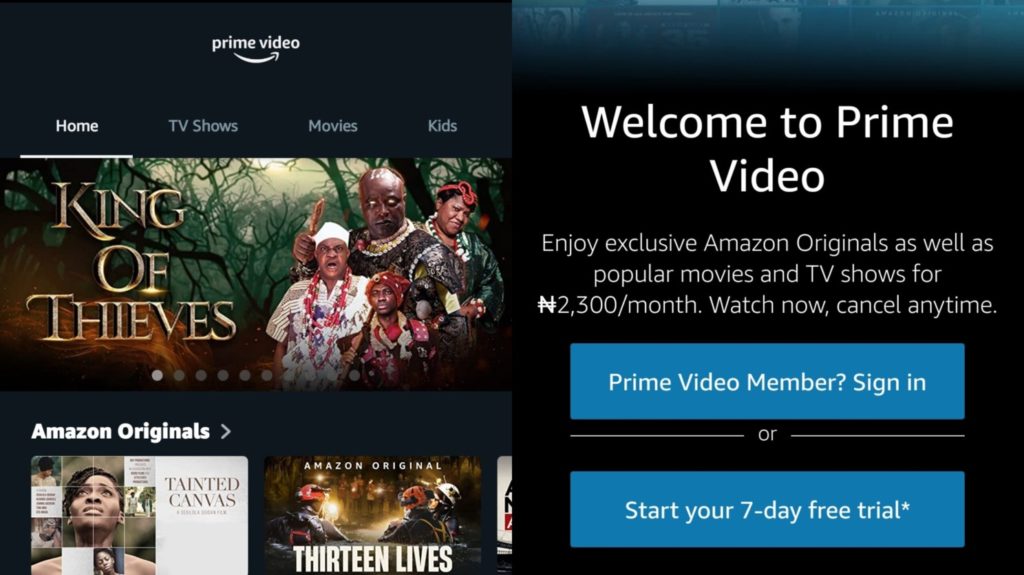
Amazon Prime has also made inroads into the Nigerian market, thanks to its partnership with Konga, Nigeria’s largest online retail store. Through this partnership, Amazon Prime has been able to offer customers access to a wide range of products, at competitive prices. 

Amazon Prime has also tailored its services to the Nigerian market, by offering payment options in local currency, as well as providing customer support in local languages. 

Canva, Netflix and Amazon Prime Success Story In Nigeria.

According to recent research, Canva has seen a steady increase in the Nigerian market since its African expansion in 2020. Canva now has over 500,000 active users in Nigeria, with an average of 1 million downloads per month.

Netflix has seen an even more impressive expansion, with over 2 million active users and viewing hours of up to 5 million per month. 

Amazon Prime has also seen success, with nearly 1 million active subscribers in Nigeria. Together, these three companies are helping to revolutionise the African market and are making a positive impact on the Nigerian economy.

In Conclusion 

Canva, Netflix, and Amazon Prime have all successfully tapped into the Nigerian market by offering tailored services and partnering with local content providers. 

These companies have also made efforts to ensure their services are available in the country, by providing payment options in local currency and offering customer support in local languages. As the African market continues to grow, these companies will likely continue to find success in the region.

Related Content

What Happened to Mr. Biggs and Lessons to be Learnt

The post How Canva, Netflix, Amazon Prime Tapped Into The Nigeria Market – African Expansion appeared first on MarTech Africa.

]]>
Product Launch Marketing Ideas https://martechafrica.com/blog/product-launch-marketing-ideas/?utm_source=rss&utm_medium=rss&utm_campaign=product-launch-marketing-ideas Tue, 11 Feb 2025 10:39:02 +0000 https://martechafrica.com/?p=979 A Product Launch marketing strategy is a way of organizing the presentation of a product to customers. It can be […]

The post Product Launch Marketing Ideas appeared first on MarTech Africa.

]]>
A Product Launch marketing strategy is a way of organizing the presentation of a product to customers. It can be done in a variety of ways. You need something that grabs your customers’ attention, stays in their minds for a long time, and makes them come back for the product. 

Many marketing experts agree it is the visual quality of creatives that is a common thread in all successful product launch campaigns. So it all comes down to the designs you use to promote your product launch. 

Check out some Product Launch Marketing Ideas!

Teasers and Trailers

This design comes in handy for your pre-product launch event for buzz generation. What better way to get it going than a teaser or a trailer. Video content has a higher reach and engagement than textual and static graphic content. 

Teasers and trailers only let out a little about the product, just enough to generate curiosity so that people tune in when the actual product launch event is. 

The perfect teaser and trailer: 

  • Are short enough to make it suitable for social media 
  • Are in line with your brand style guidelines 
  • Showcase the product aesthetically 
  • Work without audio with text overlays and closed captions

Samsung and its Galaxy Unpacked teaser

This 45-second spot presents a new innovative smartphone as it implies the arrival of a new range of foldable smartphones! A successful bet with impactful statistics:

This ad has a total of over 16 million views and over 29,000 likes on YouTube.

Product Promo Videos 

While the intent of product promo videos is the same as that of teaser/trailer videos, the styling is a little different. Product promo videos go a little beyond a few seconds of well-edited footage and reveal a little more of the product. 

Some details to include in your product promo videos for your pre-product launch campaign include: 

  • The product launch date 
  • Details of the product such as make, utility, and other product specifications
  • Preview of the actual product design
  • Preview of the product’s full-fledged ad

Chipper Cash video promotion with Burna Boy

This video promotion has a total of 16 million views on Youtube.

Pre-order and Launch Announcements

From teasers and promo videos, let’s move closer to the product launch. As the launch date nears, customers get hungry for more information. And that is the perfect time to load them up with all the important dates, sales links, and pre-order details.

Pre-orders are a great way to boost your sales revenue, even before the launch, and generate FOMO within customers so that they secure the product while stocks last.

Now, there are many ways to leverage design for these announcements: 

  • Banners on your website/ecommerce site to announce pre-order sales and launch dates to potential customers
  • Email marketing campaigns with countdown emails, pre-order announcements, and announcements about quantity in stock 
  • Social media stories on Instagram, Facebook, and Snapchat to generate inbound traffic to your sites. 

A mix of graphic design, animation, and video designs helps you cater your campaign to a wide audience base.

Gamified Content

Engagement moves mountains. But creating it can be tricky. Especially as algorithms keep changing the game on us quite often. That’s why you need to pull out the big guns.

And that is gamified content for you in a nutshell. Everyone loves puzzles, prizes, and participation. So whip out some exciting contests for your customers across all marketing channels for your product launch. 

Some gamified content ideas are: 

  • Puzzles or polls on social media with a giveaway linked to them
  • Interactive videos on your website, landing page, social media, and newsletters 
  • Engaging and fun puzzles that promote the product indirectly 

Sproxil Nigeria Launches “Shoot Your Shot” Gamification Campaign

Many brands leverage Valentine’s season as a means to engage with their customers. With that in mind, Sproxil took a proactive step to launch the “shoot your shot” campaign; designed to encourage repeat purchases by engaging users through a virtual archery gaming session.


OOH Advertising 

While many force you to think this way, the world is not completely digital yet. While the statistic of 55% internet penetration may be very persuasive, what we need to understand is that the digital audience consumes offline content too. And that is why it is important to invest in quality, innovative, and strategic offline advertisements, too. Specifically, billboards and other Out of Home advertising channels. 

You can link your offline campaigns to your online store with QR codes. Then you will have the best of both worlds by engaging potential customers on and offline.

Exclusive Packaging Design 

What if the product could promote itself? Yes, the best method to bring customers to your product is the packaging design.

A well-designed package is much more effective than any other promotional strategy. And in fact all of your other promotions depend on it. By leveraging the techniques of FOMO marketing, you can launch an exclusive, limited packaging design to make the product fly off the shelves. 

Promoting the product launch and motivating customers to pick up the products also becomes easier with such a sweet offering. 

Instagram Reel or Tiktok Challenge 

Have you noticed how easy it is to go viral with Instagram Reels or TikTok videos? These two platforms have the highest viewerships today, and the format is a runaway hit. The audience here is also the hardest to reach – Gen Z and Millennials. So this is not a platform you can ignore anymore, nor is it just a trend. 

It is time to consider creating TikTok, and Instagram reels branded challenges. But how?

  • Create videos that are easier to replicate with your products and reward customers by offering rewards and goodies. 
  • Use branded hashtags  to promote your product launch. 

For the success of these challenges, the primary quality of the videos will be an enormous factor. So ensure that a qualified professional team edits and designs the videos for these platforms.

In Conclusion

Product launches are hectic in themselves without the additional responsibility of designing your launch campaigns. But these campaigns often make or break a product’s life cycle in the market. You need a good mix of graphic design and video design services for an effective launch campaign.

Doingsoon is an experiential marketing agency and we offer brand activation and promotion for your brands. These services span across a ton of design categories and ensure that your product launch campaigns are successful and ROI positive. 

Related Content

Market Research for Product Validation

The post Product Launch Marketing Ideas appeared first on MarTech Africa.

]]>
Influencer Marketing vs Community Marketing https://martechafrica.com/blog/influencer-marketing-vs-community-marketing/?utm_source=rss&utm_medium=rss&utm_campaign=influencer-marketing-vs-community-marketing Tue, 11 Feb 2025 09:53:35 +0000 https://martechafrica.com/?p=975 Influencer marketing and community marketing are two important marketing strategies that are often confused with each other. In this article, […]

The post Influencer Marketing vs Community Marketing appeared first on MarTech Africa.

]]>
Influencer marketing and community marketing are two important marketing strategies that are often confused with each other. In this article, you will get an understanding of what they are, how they differ, and when you should use one over the other.

Influencer Marketing vs Community Marketing

Influencer Marketing is a strategy in which a company pays an influencer to promote their product or service. An influencer may be a celebrity who posts about their favorite products on social media or they may be someone who has a large following on social media because of their personal brand or career. The goal of this type of marketing is to reach people who are already interested in your product or service.

These influencers can be the following:

  • Bloggers
  • Celebrities
  • Podcasters
  • Social media stars

It’s essential to learn how to identify who the real influencers are in your field. Let’s explore how these influencers can help promote your product or service.

Community Marketing on the other hand is a strategy in which businesses reach out to people who have similar interests or values as the company does by offering discounts and promotions for those who join their community group. The goal of this type of marketing is to expand your customer base by bringing them into your brand’s network through word of mouth advertising and loyalty programs such as customer rewards programs or rewards points systems.

Community marketing seeks followers’ opinions about products and services through informal conversations and polls on blogs, forums, and other types of social media sites. The goal here is not necessarily to sell anything; instead, community marketing wants to create bonds between customers and brands by fostering authentic relationships between both groups and ultimately creating stronger ties between consumers who buy from one another than they would if they were just buying directly from a company website!

Beyond this definition, there are 3 markers that researchers say indicate a brand community:

  • Consciousness of kind 

An intrinsic understanding that people in a community are connected together, and different from outsiders.

  • Rituals & traditions 

Specific acts and behaviors that solidify culture and meaning in a community.

  • Sense of obligation to community

A sense of moral obligation that drives community members to serve each other.

Differences Between Influencer Marketing vs Community Marketing

Community marketing is the opposite of influential marketing. It involves building relationships with your customers through social media and email campaigns to encourage them to buy your products or services.

Influencers have more followers than community marketers. This makes them a better target for advertising, but it also means that they are more likely to get spam comments on their posts, which can ruin their credibility. Community marketers can be more targeted with their content and can incorporate more personal interaction into their messages.

Community marketers are often more engaged with their audience than influencers are. This they’re often willing to share some of the details of how they built up their following on social media.

When to Use Influencer Marketing

Influencer marketing for the introduction of new products

You have a new product and you don’t yet know exactly how to promote it? The answer is: a collaboration with influencers from your industry.

So if you want to bring a new product onto the market, you should look for a suitable influencer / blogger at an early stage . As soon as you have found what you are looking for, the important thing is to provide the influencer with all the important information about the product and the product itself. This also includes when the product is sold, how much it costs and when you can officially communicate about this product.

  • Make a brand better known with influencer marketing

One of the most important goals in influencer marketing is to increase brand awareness.

Influencers have a very special influence on their followers. If an influencer prefers a certain brand, this can contribute to the followers’ purchase decisions. But why is it like that?

When to Use Community Marketing

  • Product tests and product reviews

Once you have built a community for your brand, the briefing about the product is the most important thing. It is important that the community reports freely and authentically about the product.

This type of influencer marketing generates higher visibility in the short term, while in the long term it increases the findability of the product in Google search and on YouTube.

  • Word of mouth growth

Strong communities are filled with willing advocates that recommend products and vouch for a brand. Depending on the way a community is set up, they can also grow organically as members invite their networks to join.

  • Better customer experience

Community marketing, when done correctly, gives marketers a better understanding of their customers and provides an extremely authentic touch point for a number of initiatives like handling customer complaints, gathering product feedback.

In conclusion 

Considering the benefits that both community marketing and influencer marketing offer, the former certainly takes a front seat. Communities build reputation and set up brands for resilient growth in the long-term.

Related Content

Product Launch Marketing Ideas


The post Influencer Marketing vs Community Marketing appeared first on MarTech Africa.

]]>
8 Performance and Growth Marketing Tactics https://martechafrica.com/blog/performance-and-growth-marketing-tactics/?utm_source=rss&utm_medium=rss&utm_campaign=performance-and-growth-marketing-tactics Tue, 11 Feb 2025 07:42:38 +0000 https://martechafrica.com/?p=840 Business marketers have a tremendous potential to design truly effective growth marketing tactics to massively grow their organizations. Every day, […]

The post 8 Performance and Growth Marketing Tactics appeared first on MarTech Africa.

]]>
Business marketers have a tremendous potential to design truly effective growth marketing tactics to massively grow their organizations. Every day, new methods, techniques, and technologies are introduced, and smart business owners know how to use them to their advantage.

If you are looking to increase your sales and expand your business, a well thought out growth marketing tactics is essential. You need a system that generates leads and turns them into paying clients, without spending too much time and money to set it up.

It’s hard enough to craft a marketing strategy, and it’s a whole different challenge to ensure the efficiency of your customer acquisition processes. After all, customer preferences and attitudes are never static. You need to change gears and reconfigure your methods in order to produce the best possible results.

Do you want to increase your performance and growth as a business? Here are 8 tactics that really work.

  • Prioritizing Content Marketing

Content Marketing plays a critical role in attracting and nurturing leads. Even when it comes to generating leads, companies are heavily relying on creating remarkable content. It’s no surprise that 80% of Business marketers consider a lead generation to be the top goal of their content marketing efforts.

If you truly want to get more clients, you need to create engaging content pieces that leave readers to stay with your product/service.

  • Create a Simple “Give-and-Take” Approach

Don’t expect to receive if you’re not willing to give. You have to give something if you want leads.

So, what do you give?

A discount, an e-book, free webinar session, etc.

Statistics show that 73% of B2B marketers say that hosting webinars is the best way to generate leads. This is because presenting webinars creates an opportunity for your audience to educate them about what you sell and how your products can be useful.

  • Connect and Engage on LinkedIn

There is no doubt that Linkedin is a great place to generate B2B high-quality leads. According to a report, 89% of B2B marketers use LinkedIn for lead generation, and 62% say it generates them leads, over two times more than the next-highest social channel.

Use Linkedin sales navigator to make social selling easier. Find a group, engage and get involved. Participate in a discussion and share. The more you are active, the more you’ll find better prospects.

  • Use Chatbots to Increase Sales

People want quick responses to their queries or questions. Powered by technology, AI chatbots are an easy way to let your audience stay. They can be used to address customer queries, greet new leads as well.

  • Shoot Email Campaigns

Email marketing is a powerful strategy for marketers to generate leads. What else you need, relevant information, and a high level of personalization will work to close more leads.

Segmenting email lists with relevant content also makes it easy for marketers to run email campaigns and track results. If you are looking for the best email platform to start with check out Yournotify.

  • Add Email Signatures to Generate High Quality Leads

We know you’ve been sending tons of emails via your company email address right from the beginning of the day. Have you ever thought that each of your emails could be a good opportunity to get more leads?

Well, that’s a headshot way of attaching signatures to emails. Simply state your name and role.

It’s a very unique opportunity to generate leads and attract them to turn into customers. You can even promote a product offered by placing a banner just below the signature, as well as a strong call to action will do even better.

  • Get Leads from Referrals

Far more than believing in ads, your target prospects trust people who had a positive experience with you. Leverage it as much as possible. It’s no surprise that customer referrals are the strongest method of lead generation.

In fact, 86% of buyers make their purchasing decisions from satisfied customers. Consider starting a referral program to generate new leads, who in turn, come straight to purchase your product.

Develop Killer Landing Page to Get More Sales

While there’s a lot of room to check where your audience is going, a quick win strategy to bring more leads is to create a focused landing page. According to Marketo, 68% of businesses use strategic landing pages to generate new sales leads.

Landing pages enable you to get leads data so you can nurture them to turn into potential customers.

  • Create a clean landing page,
  • Use a concise header that should draw buyers,
  • Explain what you’ll offer,
  • State benefits of your product or service,
  • Add a lead form with a clear call to action.
  • Final Thoughts

For a successful marketing performance, every marketer should set two goals in mind: to capture high quality leads and build trust.

We know you’re committed to generating more and more sales but to win this, you’ll need to draft a driven lead capture process and implement tactics to convince prospects.

You need to identify the tactics that fit your business and might work. Using these marketing strategies, you’ll be able to move your customers along your sales pipeline.

Related Content

Influencer Marketing vs Community Marketing


The post 8 Performance and Growth Marketing Tactics appeared first on MarTech Africa.

]]>